
Weather Impacts on Solar + Battery Performance
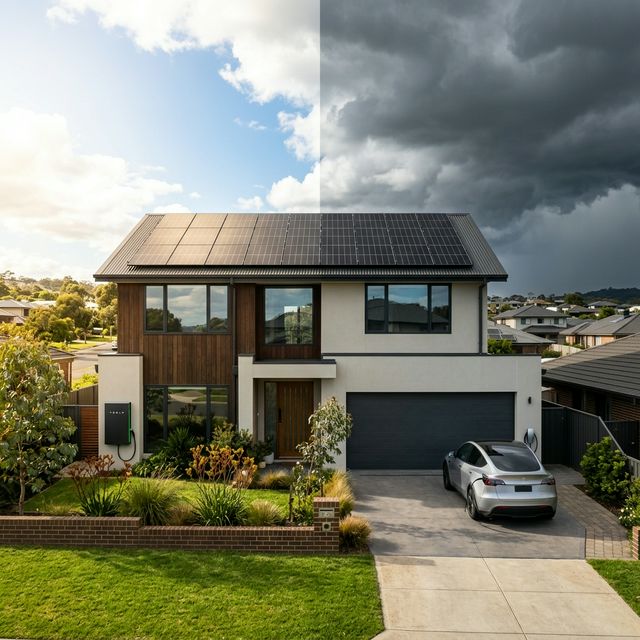
Solar panels generate electricity from light, not heat. Batteries store that electricity. Both are affected by weather — but not always in the ways people expect. Here's the real picture for Australian conditions.
Clouds and Overcast Days
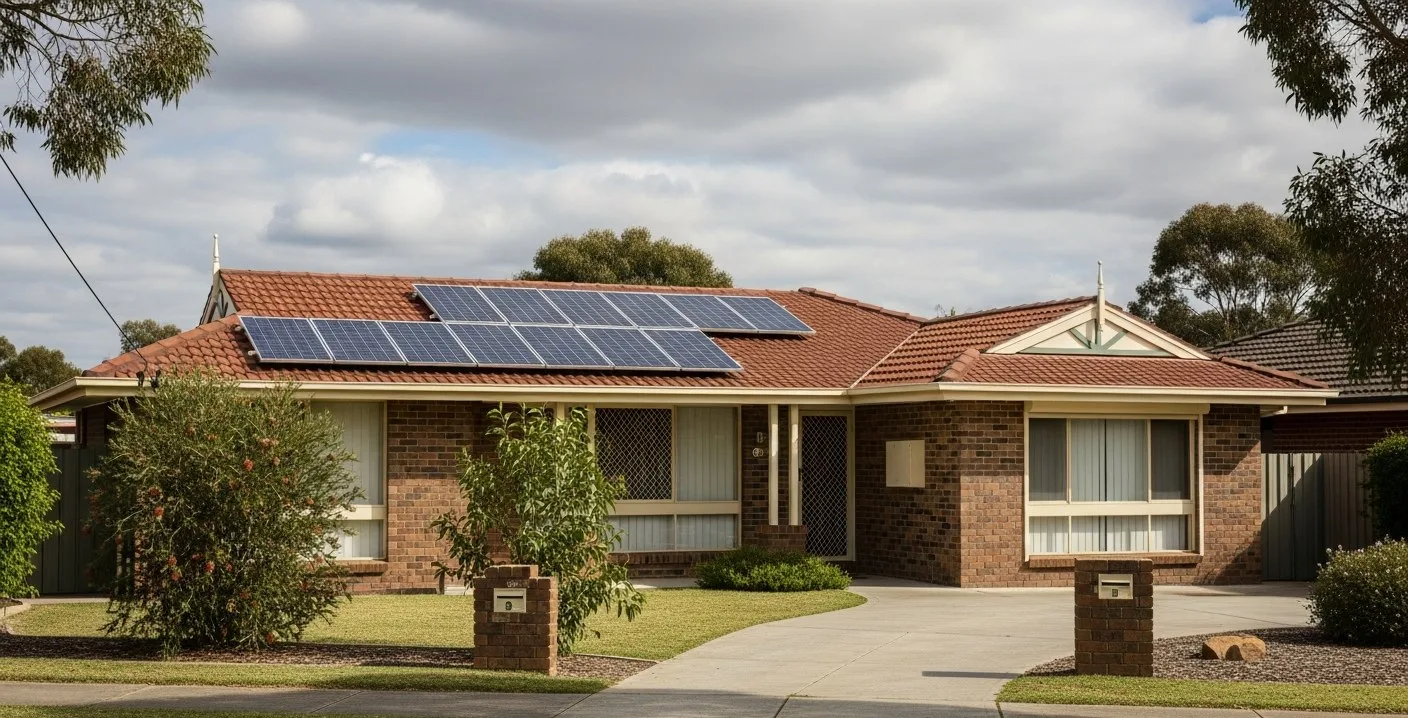
Clouds are the biggest variable in day-to-day solar generation. Thin cloud cover might reduce output by 10–25%. Heavy cloud can cut it by 75% or more. But some diffuse light always gets through — your panels will still generate something even on a grey day, just significantly less.
For battery sizing, this is why your system should be designed around average generation, not peak sunny-day output. A system that fills your battery every perfect summer day but leaves it half-charged through a cloudy Victorian winter week isn't properly sized for your needs.
Heat and Panel Efficiency
Here's a counterintuitive one: solar panels actually perform better in cooler conditions. High temperature reduces the voltage output of silicon cells. Most panels have a "temperature coefficient" — typically around -0.35% per degree Celsius above 25°C.
On a 40°C summer day, with panels potentially reaching 60–70°C on the roof surface, you might see 10–15% less output than the panel's rated capacity. This is why some installers recommend panels with lower temperature coefficients for hot climates like Western Australia or Queensland's inland areas.
Dust and Soiling

In dry, dusty areas — much of regional Australia — panel soiling can meaningfully cut output. Studies have found 5–15% monthly generation loss from dust accumulation in arid areas, recovering mostly after rain. If you're in a dust-prone area, periodic panel cleaning is worth considering.
Battery and Temperature
Batteries are more tolerant of weather than panels. Most modern LFP batteries operate comfortably between 0°C and 45°C. Extreme heat (above 40°C in a non-ventilated enclosure) can affect longevity, which is why installer placement decisions matter — avoid direct western-sun exposure where possible.
Design for Your Climate
A good installer will account for your local weather patterns in system design. If you're in coastal Queensland versus inland Victoria, the optimal system looks different. Get quotes from installers who know your local conditions on PowerSmarter.
Comments (0)
No comments yet. Be the first to share your thoughts!