
What Is a Virtual Power Plant and Should You Join One?

Your home battery earns you money by reducing your electricity bill. A Virtual Power Plant lets it earn money on top of that — by contributing grid services when the grid is under stress. But VPPs come with trade-offs, and not every battery owner should rush to join one.
Here's what you need to know before deciding.
What Is a Virtual Power Plant?
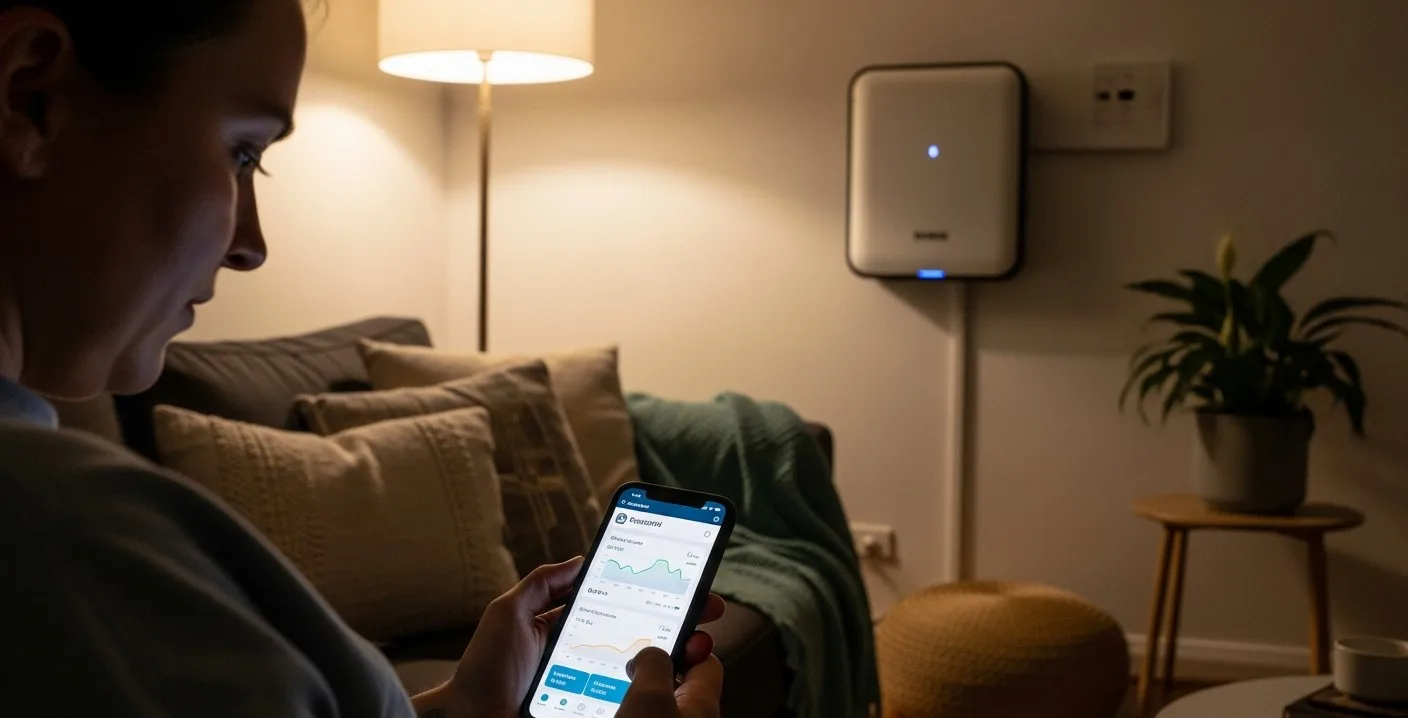
A Virtual Power Plant is essentially a network of home batteries (and sometimes solar, EV chargers, and other assets) that are aggregated and managed together to act like a small power station. When the grid needs additional capacity — usually during extreme heat events, evening demand peaks, or generation shortfalls — the VPP operator dispatches energy from the pooled batteries simultaneously.
From the grid's perspective, hundreds of home batteries acting in unison look like a controllable power source — similar to a peaker gas plant, but clean and distributed.
From your perspective: your battery discharges at times chosen by the VPP operator (within rules you agree to), and you receive a payment or bill credit in exchange.
Major VPP Programs in Australia (2026)
Tesla Energy Plan (SA and expanding)
Tesla operates a VPP primarily in South Australia, though it's expanding to other states. Powerwall owners on the Tesla Energy Plan give Tesla permission to use their battery for grid services. In exchange, they receive an electricity plan with specific TOU rates and revenue from VPP dispatch events.
Reported earnings: $200–$600/year depending on dispatch frequency. SA participants have generally seen the most active dispatch history due to SA's grid dynamics.
AGL VPP
AGL's Virtual Power Plant accepts various compatible battery brands. Participants receive a bill credit in exchange for allowing AGL to access battery capacity during grid events. AGL's network has grown substantially and operates across multiple states.
Reported earnings: $150–$400/year in bill credits. The AGL VPP has been less active in dispatch events than the Tesla SA program historically.
SA Power Networks VPP
The local DNSP in SA operates a demand management program that includes home batteries. This is network-level participation rather than retailer-level, and it's open to multiple battery brands.
Amber Electric + VPP
Amber Electric connects customers directly to wholesale electricity markets. With a home battery and Amber's smart home integration, your battery can be scheduled to charge when wholesale prices are very low (or even negative) and discharge when prices are high. This is more sophisticated than a traditional VPP but offers higher potential earnings for engaged users.
sonnen Community
sonnen operates a peer-to-peer energy trading community for sonnen battery owners. Members share excess energy between each other and receive community tariff rates. Primarily relevant to sonnen owners.
What VPP Participation Actually Looks Like
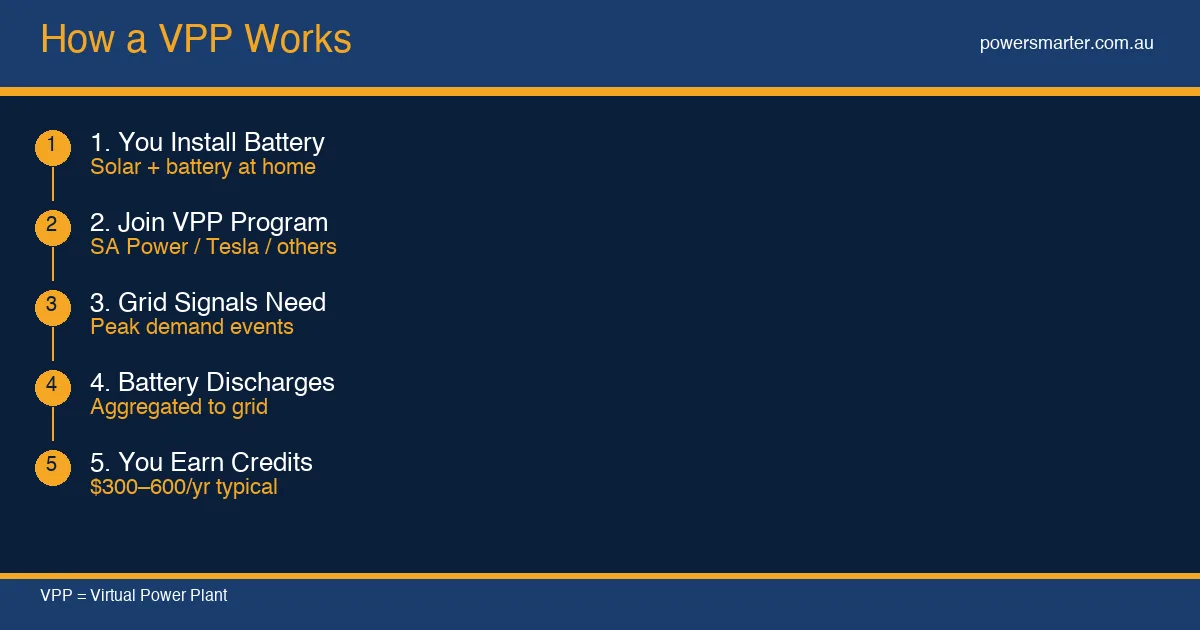
Most VPP programs work like this:
- You enrol your battery with the VPP program
- You set your minimum state of charge (SoC) — your battery won't be dispatched below this level (e.g., you keep 20% reserved for your own use)
- When the VPP operator calls a dispatch event, your battery exports to the grid or shifts household loads
- You receive payment based on the energy dispatched or the demand reduction achieved
- After the event ends, your battery recharges to its normal level
Dispatch events are typically short (30 minutes to 4 hours) and infrequent (5–30 times per year depending on the program and grid conditions). Most participants report that their day-to-day experience of their battery is largely unchanged — the VPP operates transparently in the background.
The Trade-Offs
Battery Degradation
VPP participation means additional charge/discharge cycles beyond what you'd do for your own household use. LFP batteries (which most quality home batteries use) have excellent cycle life — typically 6,000+ cycles warranted — so moderate VPP dispatch is unlikely to meaningfully impact battery lifespan. But it's worth factoring in.
Backup Availability
If your battery is dispatched during a grid event and your home then experiences a blackout, you may have less stored energy for backup than you'd expect. Good VPP programs allow you to set a minimum SoC reservation so you always have backup capacity. If blackout protection is critical, ensure your VPP contract has this provision and set your reservation accordingly.
Control Reduction
You give the VPP operator some control over when your battery charges and discharges. For most households, this is completely transparent — you won't notice. But if you've optimised complex TOU scheduling around your household's specific habits, some VPP programs may disrupt that.
Exit Clauses
Most VPP programs allow you to exit with reasonable notice (typically 30–90 days). But check the specific contract — some programs have minimum participation periods or early exit fees. Read the fine print before enrolling.
Is a VPP Right for You?
Good candidates for VPP participation:
- Your battery brand is supported by at least one active VPP program in your state
- You have more stored capacity than you typically need overnight (battery regularly still has charge in the morning)
- You're not critically dependent on having maximum backup reserve at all times
- You want to actively contribute to grid stability — there's a genuine environmental angle here
Less ideal candidates:
- You rely on your battery for backup power for medical equipment or a home business
- Your battery barely covers your overnight household needs — nothing to spare for the grid
- You're on an already-optimised TOU plan and don't want any interference with your scheduling
The Bottom Line
VPP participation is a reasonable addition to your battery's income for most households — an extra $200–$600/year with limited downside for typical users. It's not a core reason to choose a battery (the self-consumption savings are the primary financial driver), but it's a legitimate supplementary benefit.
When comparing battery brands and programs, ask your installer which VPP programs are available for each battery brand in your state, and what the reported earnings look like for your network area. The variation between programs and states is significant.
Comments (0)
No comments yet. Be the first to share your thoughts!