
Upgrading Existing Solar with a Battery: The Best Retrofit Path in 2026

Australia has over 3.6 million solar installations. The majority were installed before battery storage was economically compelling. Now that the CHBP has arrived and battery prices have fallen, millions of solar owners are asking: "How do I add a battery to my existing system?"
The answer depends on your current setup — but the path is clearer than it might seem.
Step 1: Assess What You Already Have
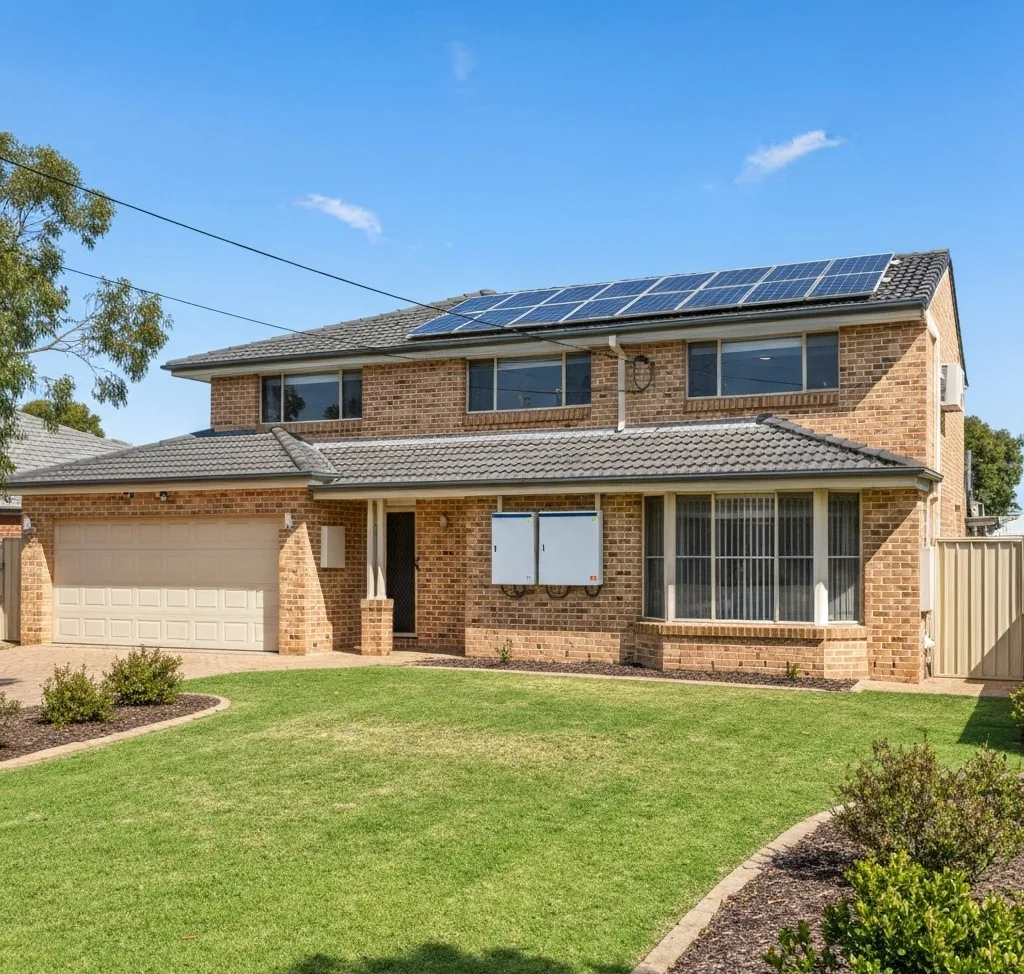
Your Solar Inverter
The inverter is the key determinant of your retrofit options. Find out:
- Brand and model (check the label on the unit)
- Age (typically stamped on the label, or findable via warranty registration)
- Whether it's a standard string inverter or a hybrid inverter
If it's a hybrid inverter (Sungrow SH series, Fronius Gen24, SolarEdge StorEdge, GoodWe ET): you may be able to add a DC-coupled battery directly. Ask your installer to assess compatibility.
If it's a standard string inverter (the majority of Australian systems): your options are AC-coupled battery or inverter replacement.
Your Solar System Size
Check the system size (kW) on your inverter or panel documentation. For a battery to be genuinely worthwhile, you want at least 6.6 kW of solar reliably generating surplus. If your system is smaller (3–5 kW) or older with degraded output, consider whether a panel upgrade alongside the battery makes sense.
Your Inverter's Remaining Life
String inverters typically have a lifespan of 10–15 years. If yours is 8+ years old:
- It may fail within the next few years
- A hybrid inverter replacement now makes sense — you'd be paying for an inverter you'd need to replace anyway
- DC-coupled battery on the new hybrid inverter gives you better efficiency
If your inverter is relatively new (under 7 years) and performing well: AC-coupled battery is typically the better financial call — no need to replace working hardware.
Option A: AC-Coupled Battery (Most Common Retrofit)
AC-coupled batteries have their own inverter built in and connect to your AC electrical system, alongside your existing solar inverter. Your existing inverter stays in place and keeps working.
Best AC-coupled options for retrofits in 2026:
Tesla Powerwall 3
The most popular retrofit choice in Australia. Works with virtually any existing solar inverter. 13.5 kWh usable, 11.5 kW continuous output. Includes its own inverter — AC-couples cleanly. CHBP eligible. Strong installer availability.
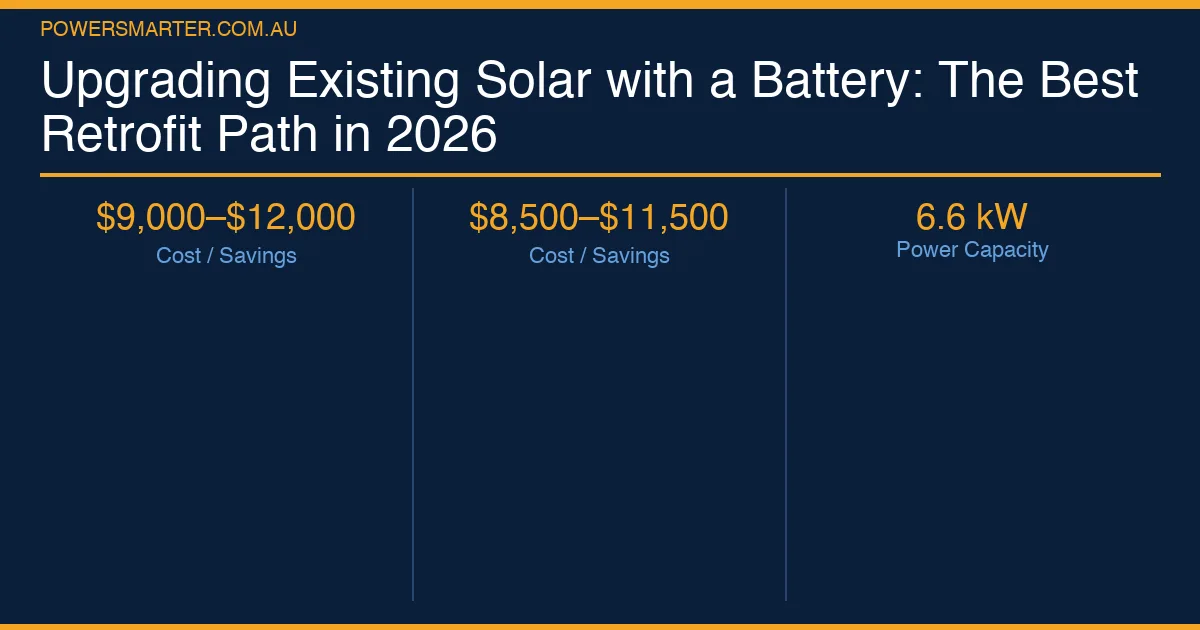
Net cost post-CHBP: approximately $9,000–$12,000
Enphase IQ Battery 5P or 3T
Best choice if you have an Enphase microinverter system. The AC-coupled design integrates perfectly with Enphase's solar-side architecture. Excellent monitoring.
IQ Battery 3T (10.08 kWh): net cost post-CHBP approximately $8,500–$11,500
sonnenBatterie eco
Premium AC-coupled option. Integrated EMS, excellent build quality, community tariff potential. Higher price point.
Option B: Hybrid Inverter Replacement + DC Battery
Replace your existing string inverter with a hybrid inverter and add a DC-coupled battery. More complex (and more disruptive to install) but delivers better long-term efficiency.
Best combinations for retrofits:
Sungrow SH Series + Sungrow SBR
The most widely installed combination in Australia. Excellent installer support, modular battery (start at 9.6 kWh, expand later), strong warranty. If your current inverter is Sungrow, a same-brand hybrid upgrade is seamless.
Fronius Gen24 + BYD Battery-Box HVM
Premium DC-coupled combination. Fronius Gen24 is compatible with multiple battery brands including BYD. Excellent for larger or more complex systems.
GoodWe ET Series + GoodWe Lynx Home
Emerging value option. GoodWe has established Australian installer network through their inverter product line.
CHBP: Applies to the Battery, Not the Inverter
The CHBP rebate applies to the battery hardware only, not inverter replacement. If you're replacing a string inverter with a hybrid inverter as part of a DC-coupled retrofit, the inverter cost is not rebate-eligible — only the battery capacity is.
This is worth factoring into your cost comparison between AC and DC coupling paths.
The Decision Framework
| Situation | Recommended Path |
|---|---|
| Inverter under 7 years, working well | AC-coupled battery (Powerwall 3 or similar) |
| Inverter 8+ years old or struggling | Hybrid inverter replacement + DC battery |
| Enphase microinverter system | Enphase IQ Battery AC-coupled |
| Already have hybrid inverter | Add DC battery directly (check compatibility) |
| Solar system under 5 kW | Assess panel upgrade first or alongside battery |
Getting the Right Quote
A good installer will assess your specific system during a site visit and recommend the optimal path — not just quote the product they prefer to install. Ask them to explicitly explain why they're recommending AC vs DC coupling for your specific situation.
Comments (0)
No comments yet. Be the first to share your thoughts!