
Upgrading Existing Solar with a Battery: The Best Retrofit Path in 2026

If you have solar panels but no battery, you're in the majority — more than 3 million Australian homes are in exactly this situation. And with the CHBP making batteries significantly cheaper than they were 18 months ago, retrofitting a battery is the most common upgrade conversation happening right now.
Retrofits are more complex than new installs, because your existing solar equipment constrains your battery options. Here's how to navigate the retrofit decision properly.
Step 1: Understand Your Existing Inverter
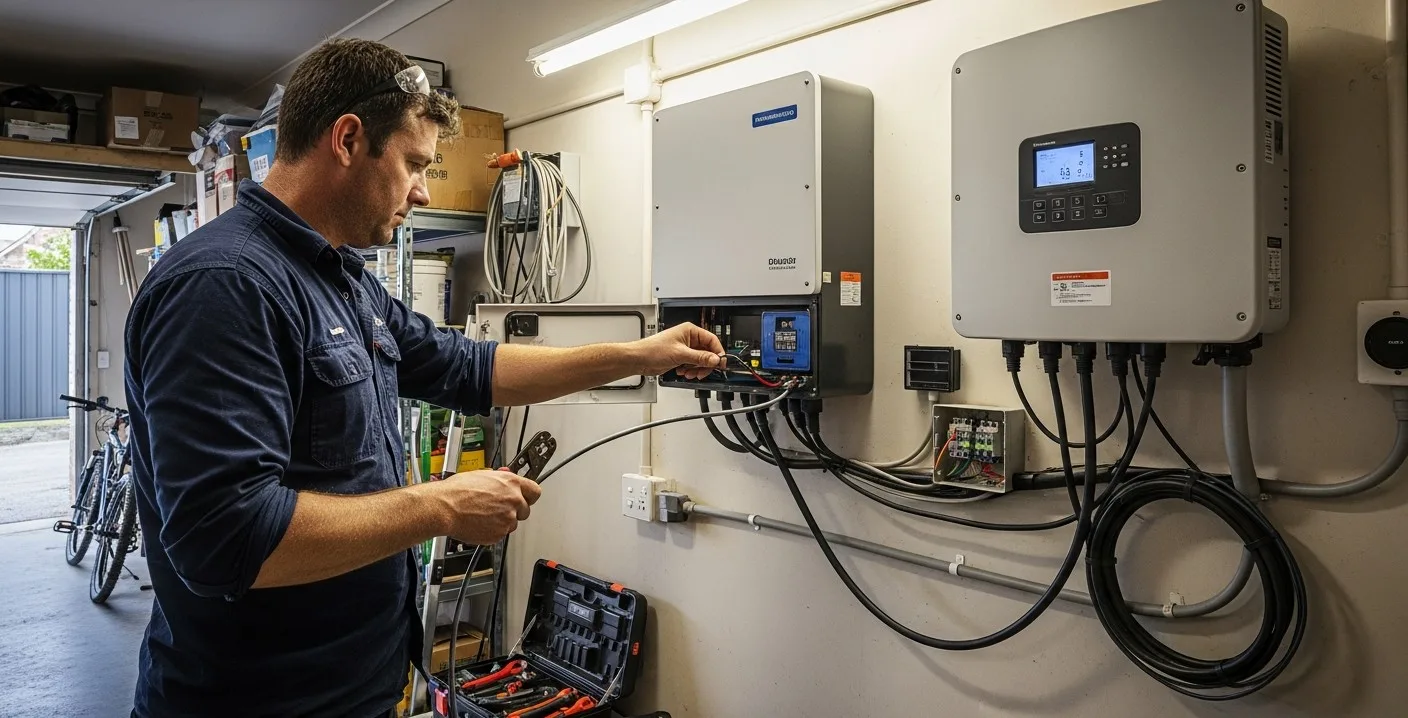
The most important factor in a battery retrofit is your existing solar inverter. Specifically, whether it's a standard solar inverter or a hybrid/battery-ready inverter — and which brands are compatible with which batteries.
Option A: Your Existing Inverter Is Battery-Compatible (DC-Coupled)
Some inverters are specifically designed with battery integration in mind. The most common examples:
- SolarEdge StorEdge: DC-coupled integration with LG RESU or SolarEdge-compatible batteries
- Fronius Symo GEN24 / Primo GEN24: Battery-ready from installation, DC-coupled
- Sungrow SH-series hybrid inverters: Designed for Sungrow SBR batteries
- GoodWe hybrid inverters: Compatible with select batteries
If you have a battery-compatible inverter, adding a battery is straightforward: the installer connects the battery to the inverter's battery port, updates the firmware, and you're done. No inverter replacement needed. This is the most cost-effective retrofit path.
Option B: Your Existing Inverter Is Standard (AC-Coupled Only)
Standard string inverters (Fronius Primo/SnapInverter, SMA Sunny Boy, older Sungrow, ABB/FIMER, etc.) don't have battery ports. For these, you have two options:
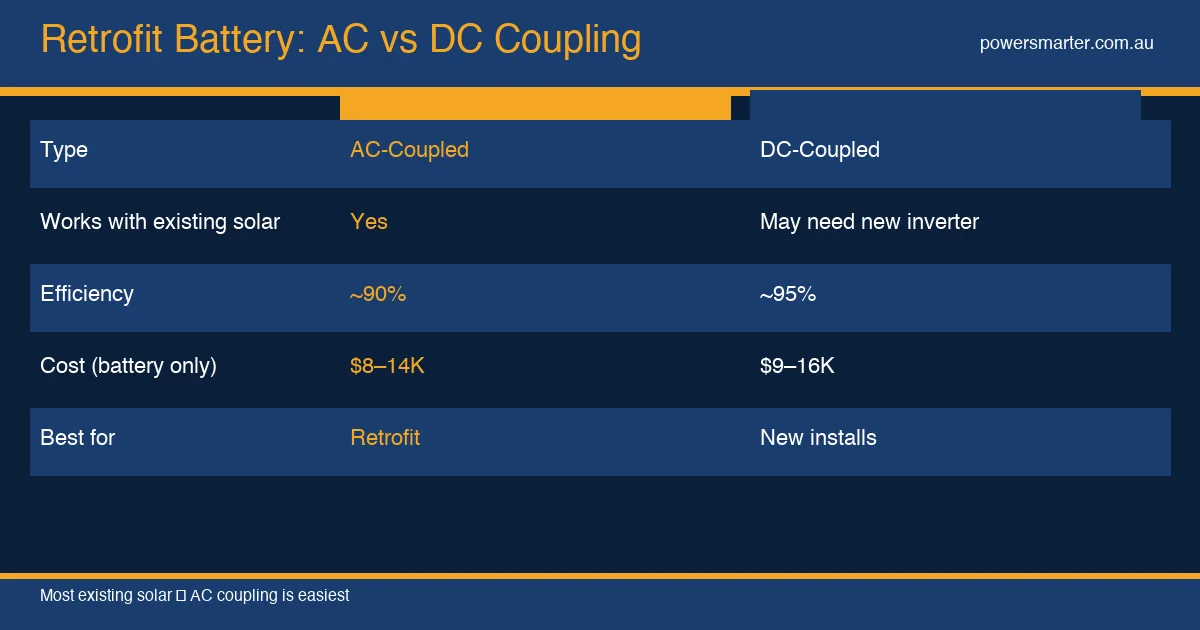
AC-Coupled Battery: The battery connects on the AC side of your system, using its own internal inverter to convert AC to DC for storage and back to AC for discharge. The battery operates independently of your solar inverter — they're connected at the switchboard, not directly. Examples: Tesla Powerwall (all versions), Alpha ESS B3 Plus in AC mode, Enphase IQ Battery.
AC coupling is the standard retrofit approach for homes with standard inverters. It works well and doesn't require inverter replacement. The mild efficiency trade-off (AC→DC→AC conversion = ~5% energy loss) is acceptable for most households.
Replace Inverter with Hybrid: Replace your existing solar inverter with a hybrid inverter that supports DC-coupled battery storage. This gives better efficiency and more integrated control, but adds the inverter replacement cost ($1,500–$3,000) to your total.
Step 2: Assess Your System's Performance
Before adding a battery, evaluate whether your existing solar system is performing well enough to justify the upgrade:
- How much are you currently exporting? A battery only makes sense if you regularly export excess solar. If you're consuming most of your solar generation in real-time (work from home, high daytime usage), a battery may not capture much additional value.
- Is your inverter still under warranty? Solar inverters typically last 10–15 years. If yours is aging and likely to need replacement soon, it might make sense to replace it with a hybrid inverter now and add a battery together.
- How old are your panels? Panels degrade at roughly 0.5–0.8% per year. Older systems (10+ years) may be generating less than they did at installation — worth knowing before sizing a battery.
Step 3: Choose the Right Battery for Your Setup
For Homes with Standard Solar Inverters (AC-Coupled Path)
Best options:
- Tesla Powerwall 3: AC-coupled, works with any existing solar. Premium price but excellent backup performance and software.
- Alpha ESS B3 Plus: AC-coupled retrofit, solid value, LFP chemistry. More affordable than Tesla.
- Enphase IQ Battery: AC-coupled, works with any solar. Best for existing Enphase systems; expensive for others.
For Homes with Battery-Compatible Hybrid Inverters (DC-Coupled Path)
Best options depend on your inverter:
- Sungrow hybrid inverter → Sungrow SBR: Natural DC-coupled pairing. Excellent value.
- Fronius GEN24 → BYD HVS: Well-established DC-coupled combination.
- SolarEdge → LG RESU or SolarEdge battery: DC-coupled integration, though LG's market position has weakened (see LG review).
What Retrofit Costs Look Like (Post-CHBP, 2026)
| Scenario | Gross Cost | CHBP Rebate | Net Cost |
|---|---|---|---|
| AC-coupled battery (10kWh) to existing standard inverter | $9,500–$14,000 | -$3,720 | $5,780–$10,280 |
| DC-coupled battery (10kWh) to existing hybrid inverter | $7,500–$11,000 | -$3,720 | $3,780–$7,280 |
| New hybrid inverter + 10kWh battery (inverter replacement) | $12,000–$18,000 | -$3,720 | $8,280–$14,280 |
The DC-coupled path is cheapest because you're not paying for an AC battery inverter inside the battery unit — the existing hybrid inverter handles conversion. If you already have a hybrid inverter, this is the most cost-effective route.
Common Retrofit Mistakes to Avoid
Buying a Battery That Doesn't Work With Your Inverter
Some installers (especially those selling a specific brand) may not inform you that your existing inverter limits your battery choices. Always ask specifically which batteries are compatible with your inverter model before agreeing to a quote.
Replacing a Perfectly Good Inverter Unnecessarily
If your existing inverter is functioning well within warranty, there's rarely a case for replacing it just to get DC coupling. AC coupling works fine, and the efficiency loss is minimal. The inverter replacement cost rarely pays off versus AC-coupled retrofit.
Not Updating the Inverter Firmware
Many older inverters need a firmware update before a battery can be successfully added. Your installer should handle this, but it's worth asking specifically — some installers skip this step, leading to monitoring and integration issues.
The CHBP and Retrofits
The CHBP applies to battery retrofits to existing solar systems — not just new combined installs. All you need is an SAA-accredited installer, a CEC-listed battery, and a grid-connected property. Your existing solar has no bearing on eligibility.
This is important because it means the federal rebate is fully accessible to the 3+ million Australian solar homes that haven't yet added storage.
Comments (0)
No comments yet. Be the first to share your thoughts!