
Time-of-Use Tariffs & Home Batteries: How to Arbitrage Your Bill
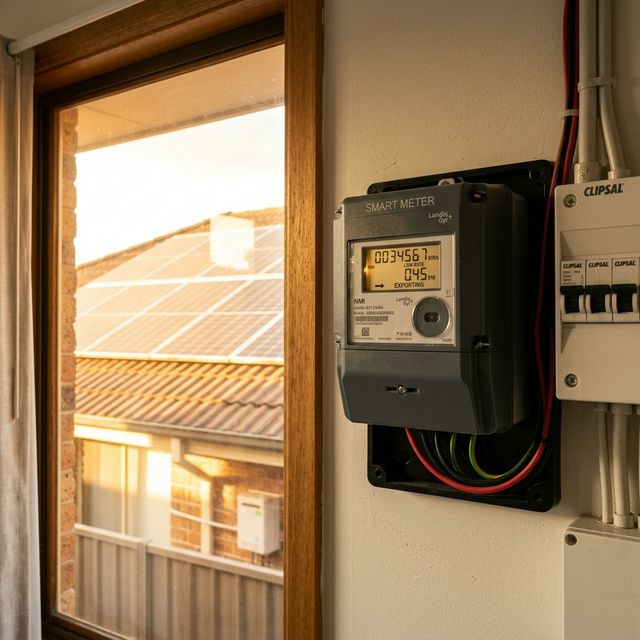
If you have a home battery, one of the most powerful things you can do is switch to a time-of-use (TOU) electricity plan. For many households, this alone can shave one to three years off the battery payback period. Here's how it works — and which plans to look for.
What Is a Time-of-Use Tariff?
A TOU tariff charges different rates for electricity depending on when you use it. Typically structured as:
- Peak: 3pm–9pm weekdays — highest rates, often 38–55 cents/kWh
- Off-peak: 11pm–7am — lowest rates, often 15–22 cents/kWh
- Shoulder: Everything else — mid-tier rates, often 22–32 cents/kWh
The idea is that the grid is most congested and expensive during the weekday evening peak. Retailers pass these wholesale price fluctuations to consumers — both as a signal to shift demand, and as a profit opportunity for battery owners.
How Battery Arbitrage Works
With a battery and a TOU plan, your strategy is simple:
- Charge the battery during cheap periods — either from solar during the day, or from the grid at off-peak overnight rates (if solar isn't sufficient)
- Discharge the battery during peak periods — instead of buying expensive evening peak electricity, you run on your stored battery
The financial gain is the spread between what you would have paid at peak rates and what you pay (or nothing, if charging from solar).
An Example That Illustrates the Value
Household in Sydney. Evening peak rate: 45 cents/kWh. Off-peak rate: 15 cents/kWh. Solar charges battery during the day for free.
- Discharge 8 kWh of battery at peak instead of buying grid power
- Saving: 8 × $0.45 = $3.60/day
- Annual saving from peak avoidance alone: $1,314/year
Compare this to a flat tariff at 30 cents: saving 8 × $0.30 = $2.40/day = $876/year. The TOU plan adds $438/year in battery value. Over a 10-year battery life, that's $4,380 extra from the same hardware.
Grid Arbitrage: Charging From the Grid
Some households with TOU plans use their battery for pure grid arbitrage — charging at the cheapest overnight rate and discharging at peak. This works best when:
- The peak/off-peak spread is large (at least 25 cents/kWh)
- The battery's round-trip efficiency is high (85–95% for most modern LFP batteries)
- You factor in battery degradation from extra cycles
Pure grid arbitrage is viable in some states (particularly SA where spreads are wide), but it adds cycling to your battery and is a secondary strategy — solar-charging first is always the priority.
Plans Worth Looking At
The right plan depends heavily on your state. Some options worth investigating:
NSW
AGL, Origin, and Amber Electric offer TOU plans with meaningful peak/off-peak spreads. Amber's real-time wholesale pricing can be particularly compelling for battery-enabled households who want maximum control.
VIC
Victoria's default market offer (DMO) doesn't differentiate time of use, but many retailers offer TOU plans. The "Solar Sponge" or "controlled load" variants from some retailers can offer very cheap midday rates for battery charging.
SA
SA has some of the widest peak/off-peak spreads in the country. AGL and Origin offer plans worth modelling. The Tesla Energy Plan (for Powerwall owners) also provides competitive rates tied to VPP participation.
QLD
Ergon and Energex territories have different tariff structures. Tariff 33 and similar controlled load options can be useful for battery owners in QLD.
Getting Your Battery Software to Play Along
Most modern batteries have scheduling capability — you can set them to charge from solar (default), charge from grid at specific hours, or discharge at specific times. Getting this right requires:
- Knowing your plan's exact peak/off-peak hours
- Setting your battery's time-based scheduling appropriately
- Reviewing and adjusting seasonally as your solar generation changes
Some apps (Tesla Energy, Sungrow iSolarCloud) handle this automatically once you input your tariff details. Others require manual scheduling. Your installer should set this up at commissioning — if they don't, ask.
The Bottom Line
Getting a home battery and staying on a flat tariff is leaving money on the table. TOU arbitrage is one of the clearest, most reliable ways to improve your battery's financial performance. It's also completely legal and exactly what these plans are designed for.
Start by reviewing your current plan, then model the TOU alternative using your last 12 months of usage data. A good energy broker or our PowerSmarter comparison tool can do this modelling for you.
Comments (0)
No comments yet. Be the first to share your thoughts!