
Tesla Powerwall vs BYD Battery-Box: Which Should You Buy?
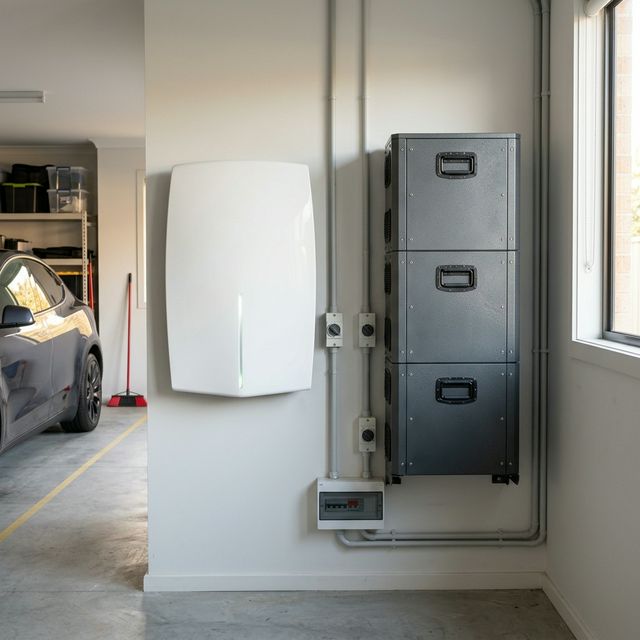
Tesla Powerwall and BYD Battery-Box are the two brands we see shortlisted most often in Australian homes. They're both quality products with LFP chemistry and solid warranties. But they serve somewhat different buyers, and the price difference between them is significant.
Here's a straight comparison without the promotional fluff.
The Core Specs
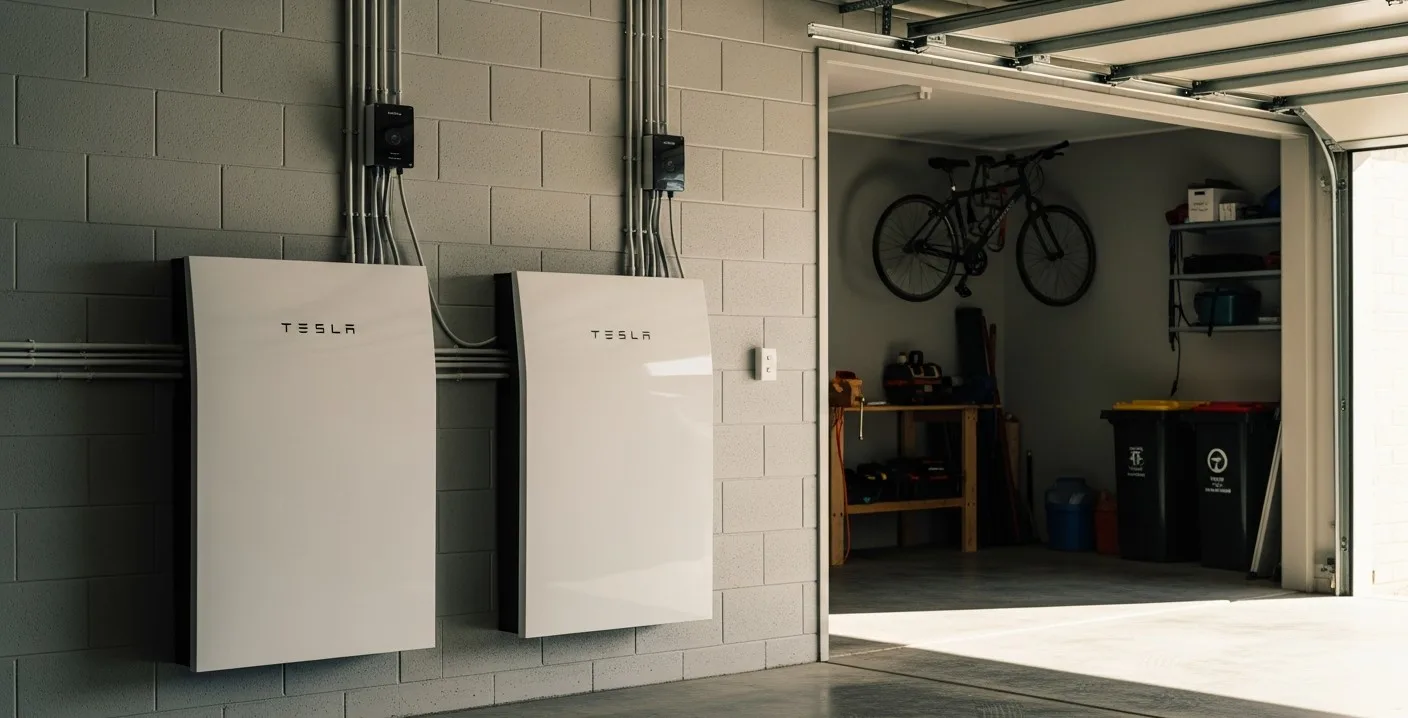
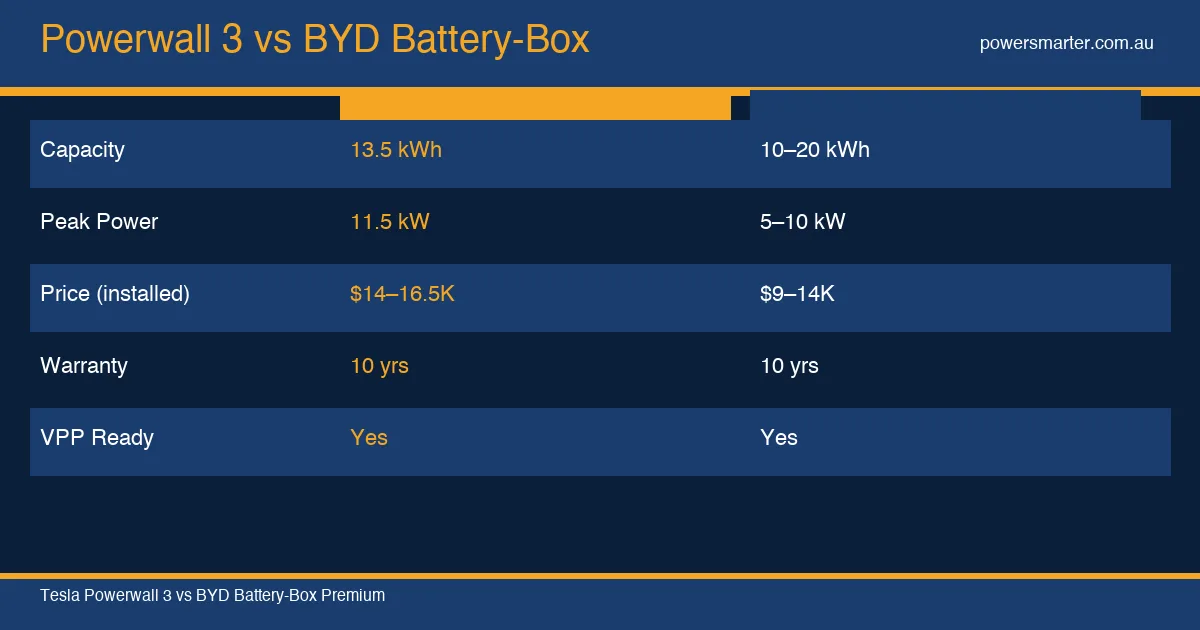
| Tesla Powerwall 3 | BYD Battery-Box HVS 10.2 | |
|---|---|---|
| Usable capacity | 13.5kWh | 10.2kWh |
| Chemistry | LFP | LFP |
| Continuous power | 11.5kW | Up to 7.6kW (inverter dependent) |
| Peak power | 22kW (10 sec) | Inverter dependent |
| Built-in inverter | Yes (solar + battery) | No (pairs with existing/new inverter) |
| Warranty | 10 years / 70% retention | 10 years / 60% retention |
| Expandable | Yes (up to 4 units) | Yes (modular, 2.56kWh per module) |
| Operating temp | -20°C to 50°C | -10°C to 50°C |
Price Comparison (Post-CHBP, March 2026)
This is where the decision gets serious:
| Scenario | Tesla Powerwall 3 | BYD HVS 10.2kWh |
|---|---|---|
| Gross installed cost | $14,000–$17,000 | $9,500–$12,000 |
| CHBP rebate | -$5,022 (13.5 × $372) | -$3,794 (10.2 × $372) |
| Net installed cost | ~$9,000–$12,000 | ~$5,700–$8,200 |
| Cost per usable kWh (net) | ~$670–$890/kWh | ~$560–$800/kWh |
The Powerwall 3 carries a premium of roughly $3,000–$4,000 over a comparable BYD setup. Some of that gap narrows for new installs where the integrated inverter eliminates a separate component cost — but BYD still comes out cheaper in most scenarios.
The Integrated Inverter: When It Matters
The Powerwall 3's biggest differentiator is its built-in solar inverter — you don't need a separate hybrid inverter. For a new solar + battery installation from scratch, this is a genuine advantage: it simplifies the system and eliminates the $1,500–$3,000 cost of a separate hybrid inverter.
For a retrofit to existing solar, this advantage largely disappears. If you have a Fronius, SolarEdge, Sungrow, or other brand inverter already functioning, you'd run the Powerwall 3 in AC-coupled mode. It works fine, but you're not benefiting from the integrated design.
BYD HVS requires a compatible hybrid or battery inverter (Fronius, SolarEdge, SMA, Sungrow, GoodWe — it works with most major brands). If you're retrofitting to an existing compatible inverter, BYD can often be added without inverter replacement, which can cut the retrofit cost significantly.
Backup Power Performance
This is the biggest real-world performance difference between the two:
Tesla Powerwall 3 delivers 11.5kW continuous / 22kW peak. In a blackout, it can run your entire home simultaneously — reverse-cycle AC, electric oven, EV charger. That's class-leading backup performance.
BYD HVS backup power depends on your inverter. A compatible Fronius or SolarEdge inverter typically delivers 5–8kW of backup power. Enough for essentials — fridge, lights, charging devices, one AC unit — but not your full peak load.
If whole-home blackout coverage is important to you (medical equipment, home business, area prone to outages), the Powerwall 3's backup advantage is real and worth something.
Software and App Experience
Tesla: The Tesla app is the gold standard in home battery monitoring. Real-time energy flows, customisable TOU scheduling, Storm Watch (pre-charges ahead of severe weather), VPP enrolment, and detailed historical data. Excellent software.
BYD: BYD's monitoring is inverter-dependent — if you pair with Fronius, you'll use the Fronius Solar.web app, which is solid. SolarEdge's monitoring is excellent. The experience varies by what inverter you've chosen. BYD's native app is functional but not a standout.
Installer Access
BYD wins on installer flexibility. It works with almost every major inverter brand, so any SAA-accredited installer who works with those brands can install a BYD. That means more competition for your job and easier access in regional areas.
Tesla requires Tesla-certified Powerwall installers — a narrower pool. In major cities, the network is solid. In regional areas, you may have fewer options and longer waits.
Warranty: The Fine Print
Both offer 10-year warranties, but with different capacity retention guarantees:
- Tesla: guaranteed 70% capacity retention at 10 years
- BYD: guaranteed 60% capacity retention at 10 years (though real-world LFP degradation is typically 20–25% over 10 years — better than the 40% guarantee suggests)
Tesla's written guarantee is more conservative (better for consumers). BYD's LFP chemistry typically performs better than its warranty minimum in practice.
Who Should Choose What
Choose Tesla Powerwall 3 if:
- You're doing a brand-new solar + battery installation from scratch
- Whole-home blackout backup is a genuine priority
- You want the best app and monitoring experience
- Budget is not your primary constraint
- You want to join the Tesla VPP
Choose BYD Battery-Box if:
- You're retrofitting to existing solar with a compatible inverter
- Fastest payback is your priority
- You're in a regional area with fewer Tesla-certified installers
- You want modular expansion capacity (starting at 5kWh and adding later)
- You're comfortable with inverter-dependent backup (not whole-home)
The Honest Summary
For most Australian households doing a battery retrofit, BYD delivers better value. For new solar + battery installs where whole-home backup matters, Powerwall 3 is genuinely competitive despite the premium. Neither is a bad choice — but they suit different situations, and understanding which situation you're in will save you $3,000–$4,000.
Comments (0)
No comments yet. Be the first to share your thoughts!