
Sungrow vs Alpha ESS: Budget Battery Shootout
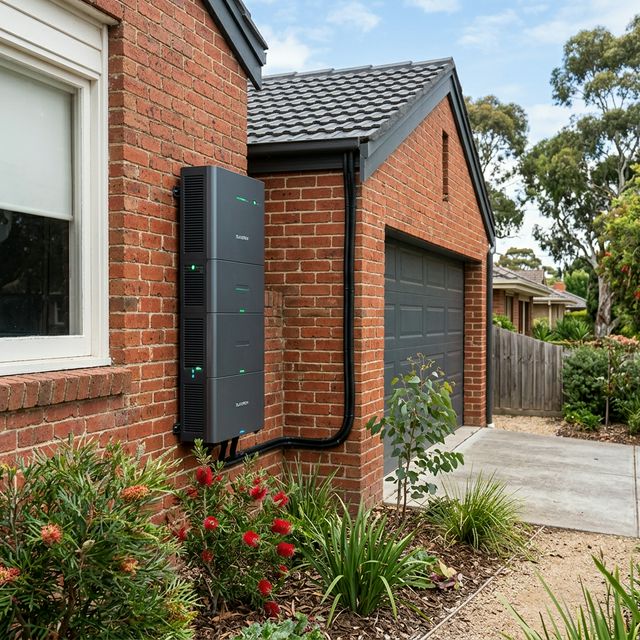
Not everyone needs a Tesla Powerwall. If you're looking at home batteries with a keen eye on value, Sungrow and Alpha ESS are the two names that keep coming up — and for good reason. Both brands offer solid, CHBP-eligible batteries at price points well below the premium tier.
So which one should you buy? Here's how they stack up.
The Brands: Quick Background
Sungrow is one of the world's largest inverter manufacturers, with a strong track record in Australia's solar market. Their SBR battery line benefits from deep engineering expertise and a well-established local installer network.
Alpha ESS is a Chinese energy storage specialist, with the SMILE series being their flagship residential offering in Australia. They've been active in the Australian market since around 2018, with reasonable installer support across major cities.
Capacity and Modularity
Sungrow SBR
- Modular design: 3.2 kWh per module
- Range from 9.6 kWh to 25.6 kWh (3–8 modules)
- Works with Sungrow hybrid inverters
Alpha ESS SMILE-B3 Plus / SMILE5
- SMILE-B3 Plus: 5.7 kWh base, expandable to 11.4 kWh
- SMILE5: 5 kWh, can stack multiple units
- Works with Alpha ESS inverters (and some third-party compatible models)
Sungrow has a clear advantage in modularity — you can right-size precisely. Alpha ESS's expansion options are more limited.
Pricing: What Australians Are Paying
Post-CHBP rebate, in March 2026:
Sungrow SBR (9.6 kWh installed)
- With CHBP: approximately $6,500–$8,500
- Without CHBP: approximately $9,500–$12,000
Alpha ESS SMILE-B3 Plus (11.4 kWh installed)
- With CHBP: approximately $7,000–$9,000
- Without CHBP: approximately $11,000–$14,000
On a pure dollars-per-kWh basis, Sungrow tends to win. But price alone shouldn't decide this — consider total system cost including the inverter.
CHBP Rebate Eligibility
Both are eligible for the Commonwealth Home Battery Program ($372/kWh for the first 50 kWh), provided your installer holds SAA accreditation. Confirm this before signing a contract.
Performance and Reliability
Sungrow SBR
As a product from one of the world's biggest inverter companies, Sungrow's engineering quality is high. The SBR's LFP (lithium iron phosphate) chemistry delivers excellent cycle life and is inherently safer than NMC alternatives. Australian installer feedback has been generally positive on reliability.
Alpha ESS
Alpha ESS has a more mixed track record in Australia. The hardware itself is generally solid, but some Australian homeowners have reported slower warranty claim resolution compared to brands with stronger local support infrastructure. That said, their product quality has improved significantly since 2022.
Installer Network
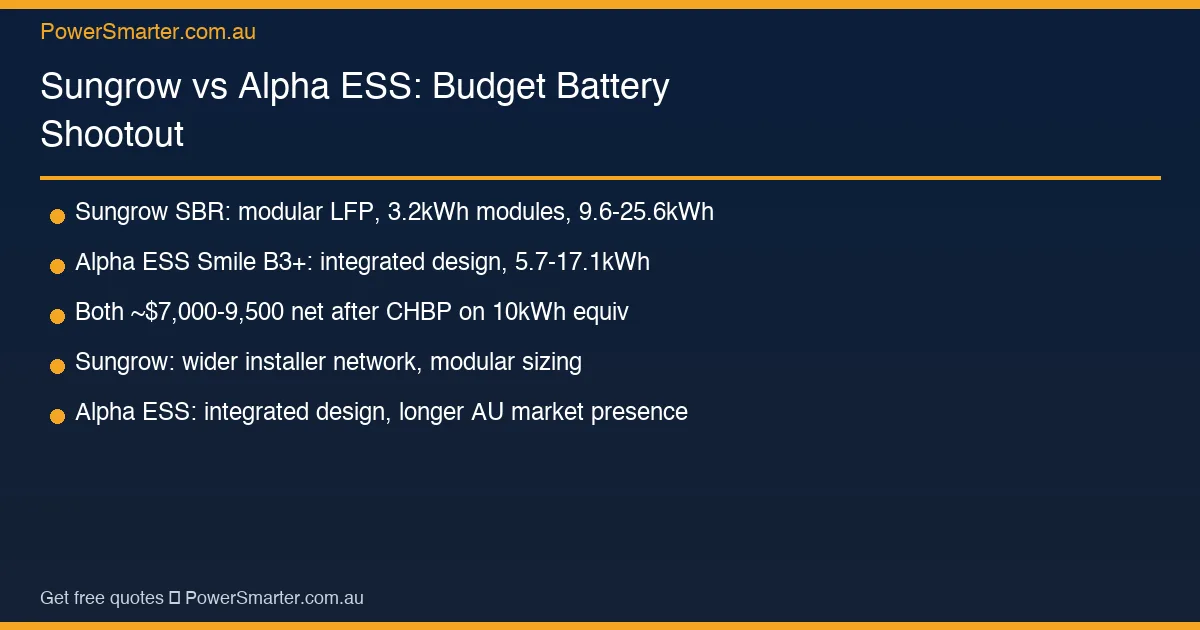
Sungrow has a clear advantage here. Their inverters are already in tens of thousands of Australian homes, and most quality installers have Sungrow experience. Finding a Sungrow-certified installer is rarely a problem.
Alpha ESS has a smaller but dedicated installer network. In regional areas especially, finding an Alpha ESS-experienced installer can be more challenging. This isn't a dealbreaker, but it's worth checking installer availability in your area.
Warranty
- Sungrow SBR: 10 years, 70% capacity retention
- Alpha ESS: 10 years, 80% capacity retention (higher stated retention, though real-world outcomes vary)
App and Monitoring
Sungrow's iSolarCloud app is reliable and feature-rich. Alpha ESS has their own Alpha Cloud platform — functional but less polished. If you live and die by app data, Sungrow is the safer bet.
Who Should Buy Sungrow?
- You want confidence in installer support and local expertise
- You're building a new Sungrow inverter + battery system
- You value modularity and want to start at 9.6 kWh and expand later
- You want a well-supported, widely-understood product
Who Should Buy Alpha ESS?
- You have an installer with strong Alpha ESS experience
- The price works better for your budget in a head-to-head quote comparison
- You're in a metro area where installer access is easy
The Verdict
If we had to pick one: Sungrow. The installer network, pricing, and reliability record give it a meaningful edge for most Australian buyers. But the best way to decide is to get quotes for both and see what your local installers recommend — their hands-on experience with both products in your specific area matters more than any spec sheet.
Comments (0)
No comments yet. Be the first to share your thoughts!