
What Happens to Your Solar Battery in a Blackout?
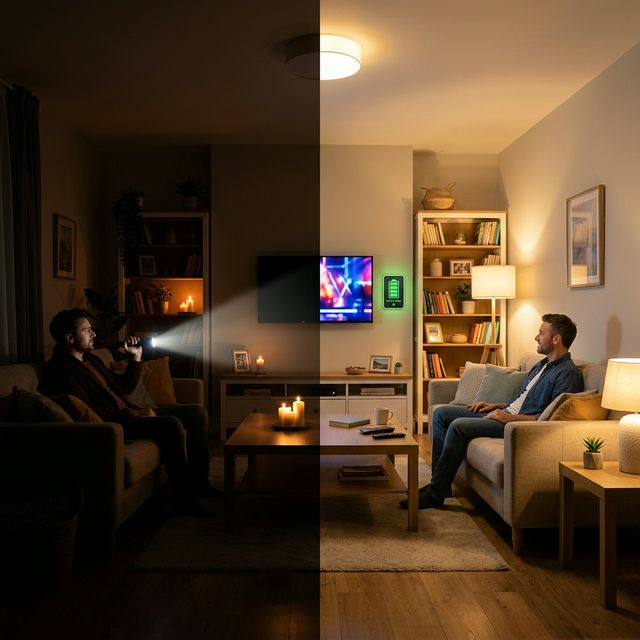
One of the top reasons Australians buy home batteries is backup power. But there's a persistent misconception: most people assume that having solar panels means their lights stay on in a blackout. They don't — not without a battery configured for backup mode.
And even with a battery, what happens during an outage varies significantly between brands and system configurations.
Why Solar Panels Alone Don't Help in a Blackout
Standard grid-connected solar inverters are required by law to shut down when the grid goes down. This is a safety feature — to protect linesmen working on the grid from unexpected live power. So even on a sunny day with a working solar system, if the grid fails, your solar shuts off.
This surprises a lot of new solar owners. It's also why "I already have solar" isn't a backup power solution on its own.
What a Battery Changes
A battery with backup capability can island — that is, disconnect from the grid and create its own mini-grid to power your home. When the grid fails, the battery detects the outage and switches to backup mode, typically within milliseconds.
But the specifics matter enormously:
Whole-Home vs Partial Backup
Some batteries are configured to back up your whole home — every circuit, including high-load appliances like air conditioners and electric ovens. Others are configured to back up only a dedicated circuit panel of critical loads (fridge, lights, phone chargers, router).
Whole-home backup is technically possible with most quality batteries, but it requires your installer to design the system for it. Critical-loads-only backup is simpler and cheaper to set up, but limits what you can run.
Power Output During Backup
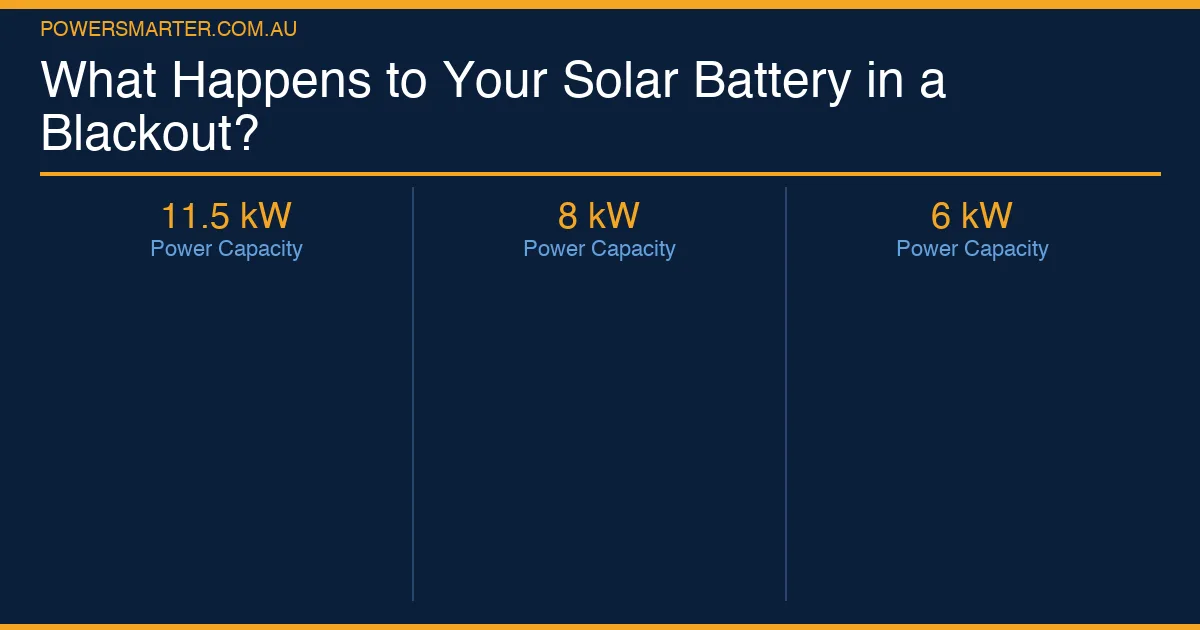
During an outage, your battery's continuous power output determines what you can run simultaneously. This is where brands diverge significantly:
- Tesla Powerwall 3: 11.5 kW continuous — can typically handle most whole-home scenarios including reverse-cycle AC
- BYD Battery-Box HVM: Depends on paired inverter, typically 5–8 kW continuous
- Sungrow SBR: 5–6 kW continuous in backup mode
- Enphase IQ Battery 5P: 3.84 kW continuous — better for critical loads only
If you want to run ducted air conditioning during a blackout, you need a battery with high enough output to handle the startup surge. Check the specifications carefully, and make sure your installer designs the system with this in mind.
How Long Will the Battery Last?
This depends entirely on your consumption during the outage. A rough guide:
- Critical loads only (fridge, lights, phone chargers, router): 2–3 kW average load → a 10 kWh battery lasts about 4–5 hours
- Critical loads plus a small split-system AC: 3–4 kW average → 2.5–3 hours
- Full house including ducted AC: 5–8 kW average → 1.5–2 hours
However — if the sun is still shining, your solar continues to charge the battery during a grid outage (in backup mode). This can significantly extend runtime during daytime outages. A properly sized solar + battery system can often get through a typical daytime outage with minimal interruption.
Backup Mode: Automatic or Manual?
Most modern batteries with backup functionality switch automatically when they detect a grid failure — no action required from you. The switchover typically happens in under 20 milliseconds, which is fast enough that most appliances don't even notice.
Some older or budget systems require a manual switchover. Make sure you know which system you're buying.
What "Storm Watch" Mode Does
Tesla's Powerwall features a Storm Watch mode that automatically pre-charges the battery to full capacity when severe weather is forecast, using grid power if needed. Several other brands offer similar features. In storm-prone regions, this is a genuinely useful capability.
Not All Batteries Have Backup Capability
This is worth saying clearly: some battery products marketed in Australia do not include backup capability, or include it only as an optional extra. Always confirm backup functionality before signing a quote. Ask specifically:
- Does this system include automatic backup (islanding)?
- Is whole-home backup included, or only a critical loads panel?
- What is the continuous power output in backup mode?
The Honest Reality
A home battery provides meaningful backup coverage for most Australian outages, which typically last a few hours. For extended multi-day outages — rare in metro areas, more common in regional ones — a battery alone may not be sufficient without a generator or very large solar array.
For most homeowners, though, a 10–13 kWh battery with whole-home backup capability will handle the vast majority of real-world outage scenarios. That peace of mind has genuine value beyond the financial savings alone.
Comments (0)
No comments yet. Be the first to share your thoughts!