
What Happens to Your Solar Battery in a Blackout?
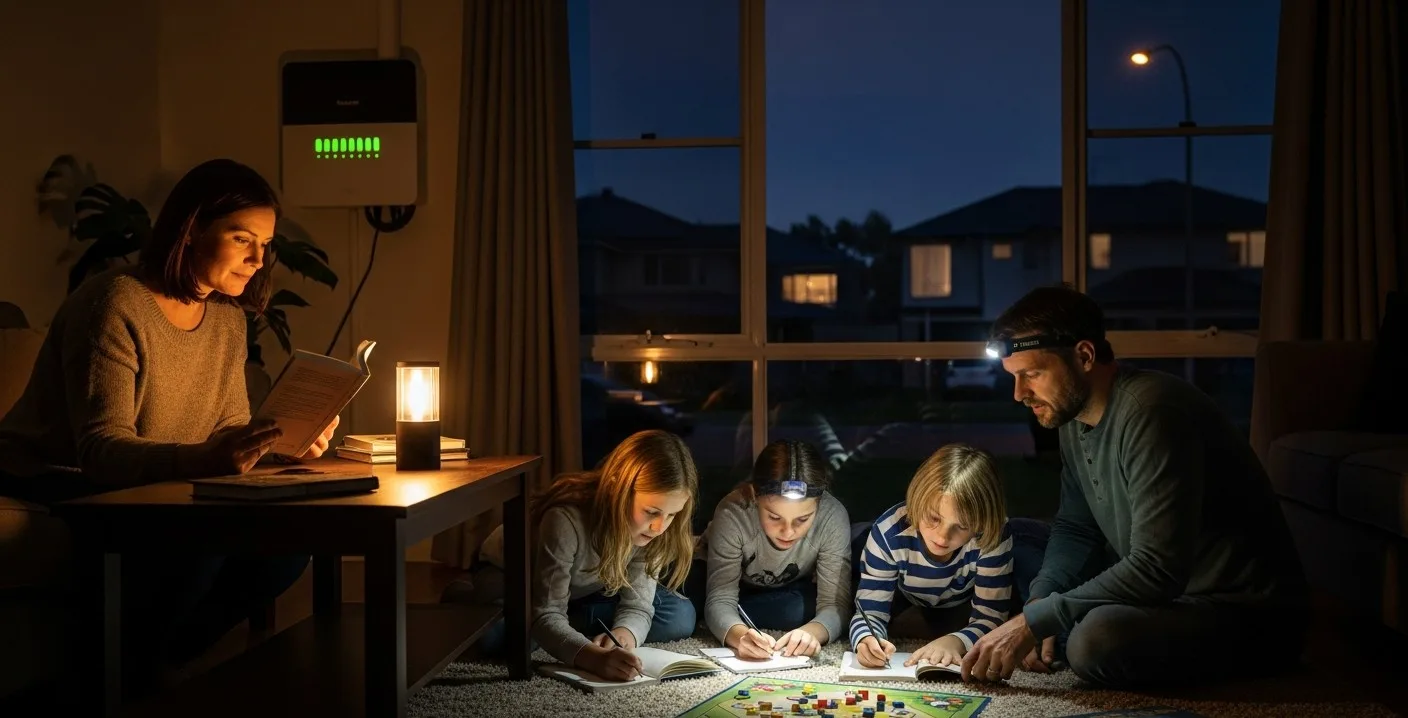
A blackout hits. The street goes dark. And you find out the hard way that your home battery doesn't automatically power your house when the grid goes down. This is one of the most common — and most expensive — misconceptions in home battery ownership.
Why Batteries Don't Automatically Provide Backup
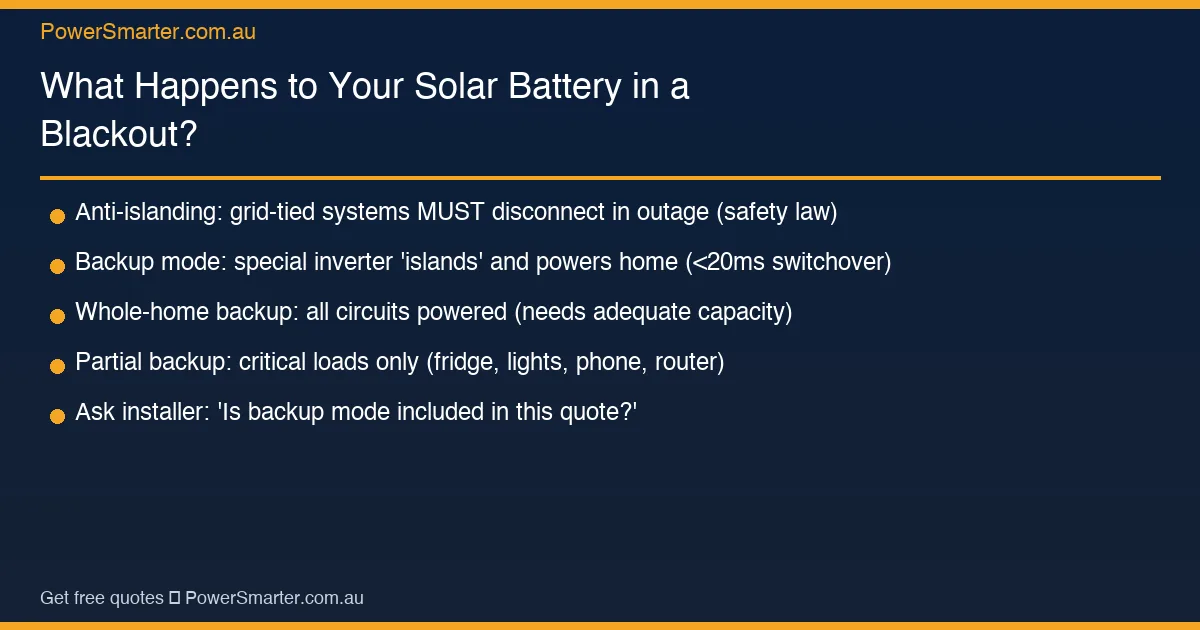
Grid-tied solar and battery systems are required by Australian standards to disconnect from the grid during a blackout. This is called anti-islanding protection — a safety requirement to prevent electrocution of line workers on what they think is a dead line.
A basic grid-tied battery follows the same rule: when the grid goes down, the system shuts off — even if the battery is fully charged.
What Backup Mode Does
When a battery system has proper backup capability:
- Grid goes down
- Inverter detects grid loss within milliseconds
- System disconnects from grid (meeting anti-islanding rules)
- Battery simultaneously begins powering your home — transition under 20ms
- Solar panels continue charging the battery during daylight
Whole-Home vs Partial Backup
Whole-home backup: Battery powers every circuit. Needs adequate capacity and high continuous power output (Powerwall 3 at 11.5kW handles most homes).
Partial backup (critical loads circuit): Only fridge, lights, phone, router stay on. Less capacity needed, better backup duration.
Brands and Backup
- Tesla Powerwall 3: Backup built in — whole-home standard
- sonnenBatterie: Backup built in — premium feature
- BYD, Sungrow, Alpha ESS: Backup requires compatible hybrid inverter configured correctly
- Enphase IQ Battery: Backup via IQ System Controller — additional hardware
Key Question Before Signing
Ask your installer: "Does this quote include backup mode configuration?" Adding backup capability post-installation can cost $3,000–$6,000 if the inverter doesn't support it. Get this right at quote stage.
Comments (0)
No comments yet. Be the first to share your thoughts!