
Renters & Home Batteries: Options Without Owning
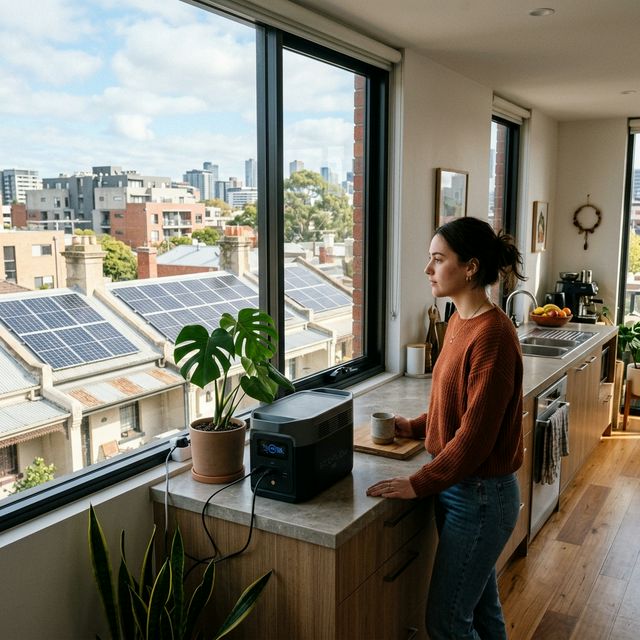
If you're renting, the standard advice on home batteries doesn't apply to you. You can't install one, you don't own the property, and the decision isn't yours to make. But that doesn't mean you're stuck paying full retail electricity prices forever. There are options — they're just different.
The Core Challenge for Renters
Home batteries are capital improvements to a property. In Australia, installing one requires landlord consent, and the landlord bears the cost unless they negotiate otherwise. Most private landlords — particularly those with older rental stock — have little financial incentive to install batteries, since energy bills go to the tenant.
This creates a split incentive problem: the person who'd benefit (the tenant) can't make the investment; the person who could make the investment (the landlord) doesn't pay the bills.
There are signs this is slowly changing, but for most renters today, you need different solutions.
Battery-as-a-Service (BaaS): Renting a Battery
A handful of Australian companies offer Battery-as-a-Service models where the battery is installed at no upfront cost, and you pay a monthly or per-kWh fee for using it. In some models, the BaaS provider retains the asset; in others, ownership eventually transfers.
This can work for renters if the landlord agrees to the installation (since it's still a physical change to the property). The landlord may actually be more receptive since there's no upfront cost — though they'll still need to sign off on the installation and any grid connection changes.
Key questions for any BaaS arrangement:
- What's the exit clause if you move? Who bears relocation costs?
- What happens to the system if the landlord sells the property?
- Does the monthly fee genuinely deliver net savings vs grid power?
Community Batteries: Coming Gradually
The Australian Renewable Energy Agency (ARENA) has funded community battery trials in several locations — large shared batteries installed in neighbourhoods that serve multiple homes via virtual crediting. If your area has a community battery trial active, renters may be able to access it through their electricity retailer without any installation at your address.
As of March 2026, community batteries are still limited in geographic coverage and mostly in trial phases. Check with your local distributor (DNSP) whether any community storage programs are available in your suburb.
VPP Programs: Income Without a Battery
If you're in a rental property that already has solar installed (increasingly common in newer rentals), some Virtual Power Plant programs allow you, as the occupant controlling the solar system, to participate in VPP programs. This doesn't require a battery — some VPPs work with smart meters and solar-only installations in demand-response mode.
This is niche and depends heavily on your specific retailer and local network, but it's worth investigating if you have solar in your rental.
Negotiating with Your Landlord
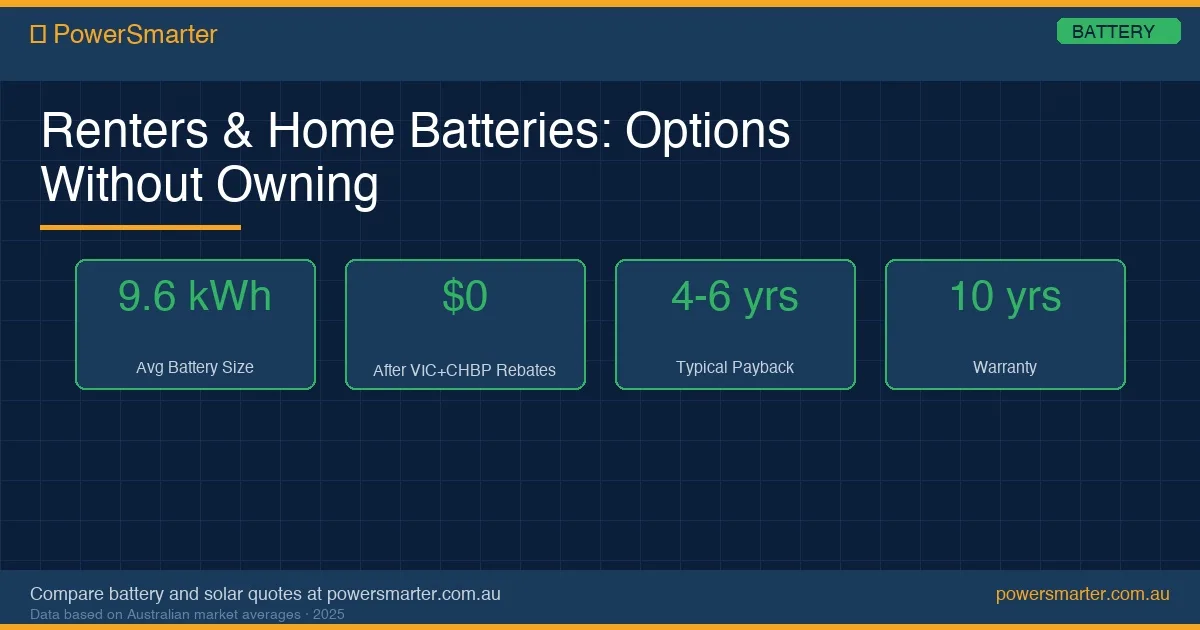
If you're in a long-term rental situation, it's worth having a direct conversation with your landlord about solar or battery installation. Frame it around property value uplift — a solar + battery system genuinely adds value to a residential property in Australia, and the CHBP rebate makes the economics more attractive for landlords.
In some states, there are emerging frameworks that allow landlords to claim renewable energy incentives and share the benefit with tenants. This is still developing policy, but it's worth researching your state's current position on landlord renewable energy investments.
Energy Plan Optimisation: The Renter's Best Tool
Without a battery, the most impactful thing most renters can do is optimise their electricity plan. This means:
- Comparing plans on a site like Energy Made Easy (government comparison tool)
- Considering time-of-use plans if you can shift major loads (laundry, dishwasher) to off-peak hours
- Using smart plugs and timers to schedule appliances during cheaper periods
- Switching to more efficient appliances where you have control (LED lighting, efficient fridges)
None of this replaces a battery, but it's within a renter's control and can meaningfully reduce bills.
The Longer View: Policy Is Evolving
Australian consumer energy rights for renters are evolving. Several states are developing or considering legislation requiring landlords to provide minimum energy efficiency standards for rental properties. Solar and battery access for renters is part of this broader policy conversation.
If you're a long-term renter, keeping an eye on your state's energy efficiency for rental properties policy updates is worthwhile — the landscape may look different in two to three years.
Summary: What Renters Can Actually Do Today
- Investigate Battery-as-a-Service if landlord is willing to engage
- Check for community battery programs in your area
- Ask your landlord about solar + battery — frame it around property value
- Optimise your electricity plan for off-peak savings
- Use scheduling tools and smart plugs to shift load to cheap periods
- Watch for state rental energy standards legislation
Comments (0)
No comments yet. Be the first to share your thoughts!