
Powerwall 3 vs BYD HVM: Full Comparison for Australian Buyers
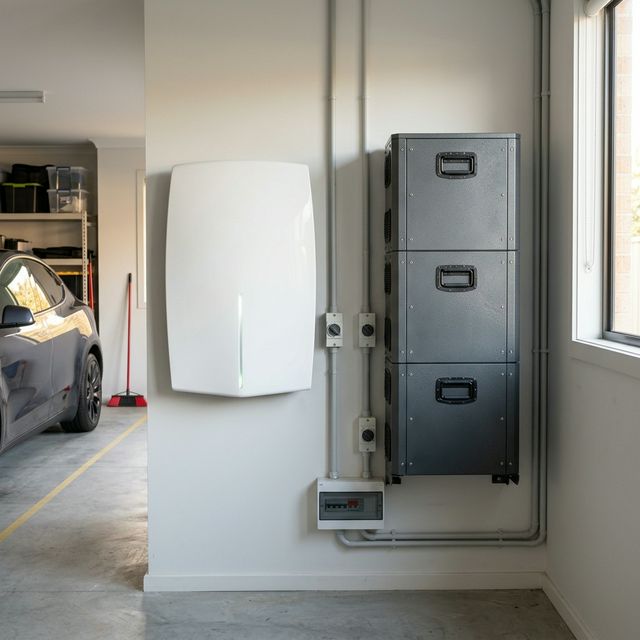
Two of the most popular home batteries in Australia right now are the Tesla Powerwall 3 and the BYD Battery-Box HVM. If you're shortlisting batteries, there's a good chance you've landed on one of these two — and for good reason. Both are excellent products. But they suit different households.
Here's the honest comparison, without brand bias.
The Basics: What You're Actually Comparing

The Tesla Powerwall 3 is a fully integrated AC-coupled unit with an inverter built in. It's a complete system — you don't need a separate solar inverter if you're starting fresh. The BYD Battery-Box HVM is a modular DC-coupled battery designed to work with a compatible hybrid inverter. Two very different architectures, and that matters depending on your setup.
Capacity
- Powerwall 3: 13.5 kWh usable (single unit), up to three units stacked for 40.5 kWh
- BYD HVM: 8.28 kWh base, expandable in 2.76 kWh modules up to 22.08 kWh per tower
The BYD's modularity is a genuine advantage if you want to start smaller and expand. With the Powerwall 3, you jump straight to 13.5 kWh.
Power Output
- Powerwall 3: 11.5 kW continuous, 22 kW peak — among the highest in its class
- BYD HVM: Dependent on the paired inverter, typically 5–10 kW continuous
If you're running high-load appliances like air conditioners and pool pumps simultaneously, the Powerwall 3's output headroom is a real advantage.
Pricing: What Australians Are Actually Paying
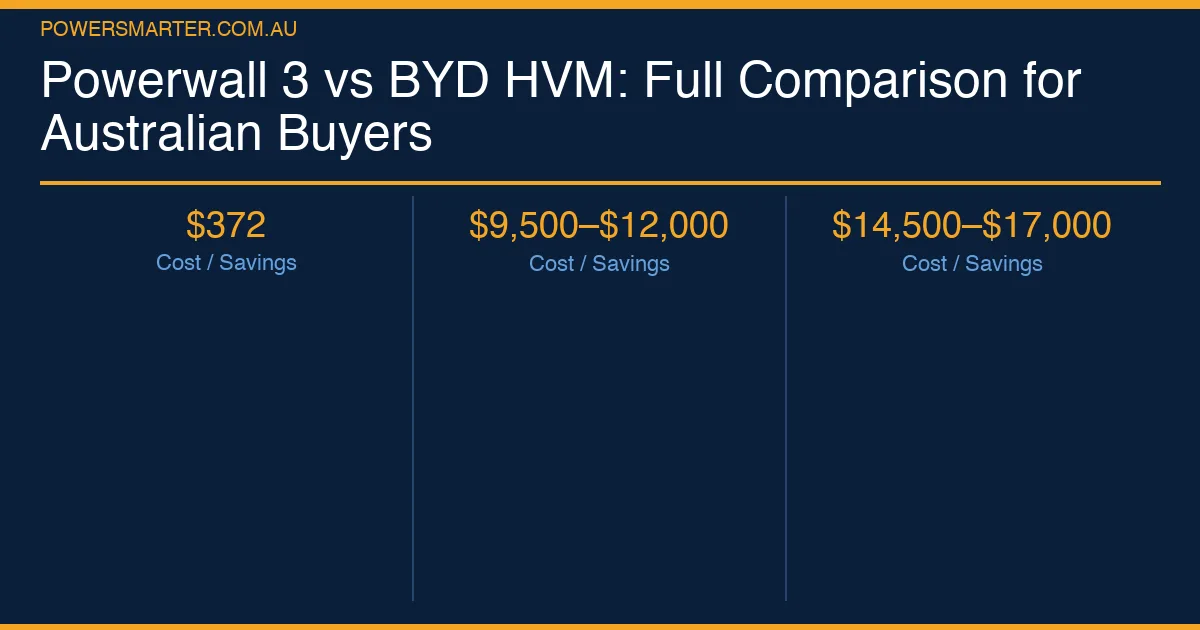
Post-CHBP rebate (which pays $372/kWh for the first 50 kWh), here's what installed costs typically look like in March 2026:
Tesla Powerwall 3
- Installed (with CHBP): approximately $9,500–$12,000 for a single unit
- Without CHBP: approximately $14,500–$17,000
BYD Battery-Box HVM (11.04 kWh — 4 modules)
- Installed (with CHBP, including compatible inverter): approximately $9,000–$12,000
- Without CHBP: approximately $13,000–$16,000
The BYD can come in slightly cheaper, particularly if you're adding it to an existing Sungrow, Fronius, or Victron inverter. The Powerwall 3 bundles the inverter, which is great for new installs but adds cost if you already have a working inverter.
CHBP Rebate Eligibility
Both the Powerwall 3 and BYD Battery-Box HVM qualify for the Commonwealth Home Battery Program. Your installer needs to be accredited through Solar Accreditation Australia (SAA) for the rebate to apply. Make sure that's confirmed before signing anything.
Who Should Buy the Powerwall 3?
- You're installing a brand-new solar + battery system (the integrated inverter makes it elegant)
- You want maximum backup power for whole-home coverage during outages
- You're considering a VPP — Tesla's Powerwall-specific VPP programs remain active
- You want a single-brand ecosystem with slick app monitoring
- Your household runs high loads simultaneously (ducted AC, EV charger, pool pump)
Who Should Buy the BYD HVM?
- You already have a solar system with a compatible hybrid inverter and want to retrofit storage
- You want to start small and expand capacity over time
- You're working with a tighter budget and the BYD's lower price point makes the difference
- Your installer has strong BYD experience — installation quality matters enormously
- You want modularity above all else
Warranty Comparison
- Powerwall 3: 10 years, 70% capacity retention
- BYD HVM: 10 years, 60% capacity retention (usable capacity, not nameplate)
The Powerwall 3's warranty is slightly stronger on capacity retention. Worth factoring in if long-term performance matters to you.
App and Monitoring Experience
Tesla's app is genuinely excellent — real-time data, storm watch mode, VPP enrolment, and remote support. BYD relies on its paired inverter's app (Sungrow iSolarCloud, Fronius Solar.web, etc.), which varies in quality. If seamless monitoring matters to you, Powerwall wins this one.
The Bottom Line
Neither battery is "better" in an absolute sense. If you're starting fresh and want the cleanest, most powerful setup, the Powerwall 3 is hard to beat. If you're retrofitting, want flexibility, or need to stretch the budget, BYD HVM is a seriously strong option.
Get quotes for both — a good installer will tell you which makes more sense for your specific roof, wiring, and usage pattern.
Comments (0)
No comments yet. Be the first to share your thoughts!