
Inverter Upgrade vs New Battery: When to Upgrade First
The Sequencing Problem That Trips People Up
Australia has somewhere north of 3 million homes with solar panels. A significant chunk of those systems were installed between 2010 and 2018, when the first wave of solar enthusiasm swept through the suburbs. The panels themselves are likely still performing well — quality solar panels genuinely do last 25+ years with minimal degradation. The inverters are another story.
String inverters from that era have a typical lifespan of 10–15 years. Which means a large cohort of Australian homeowners are approaching — or are already past — the expected life of their original inverter. And they're also thinking about batteries. So the question becomes: do I upgrade the inverter, add a battery, or somehow do both?
Why the Order Matters
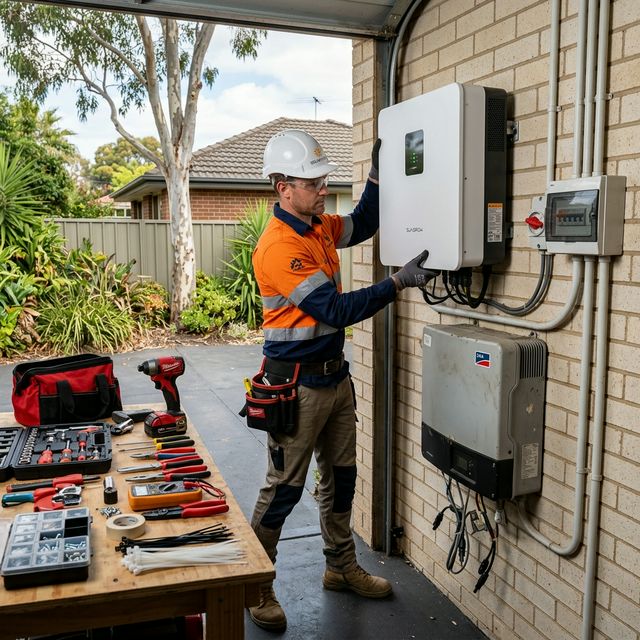
The reason sequencing matters is compatibility. Adding a battery to an existing solar system requires your inverter to either support direct battery connection (DC-coupled, requiring a specific hybrid inverter model) or to work alongside a separate battery inverter (AC-coupled, more flexible but slightly less efficient).
If your existing inverter is approaching end of life, buying a battery that's AC-coupled to it might mean you're replacing the inverter within a year or two anyway. That's two separate costs instead of one combined hybrid inverter + battery solution. In some cases, it's still the right call — but you should make that choice deliberately, not accidentally.
When to Upgrade the Inverter First
Upgrade your inverter before adding a battery if:
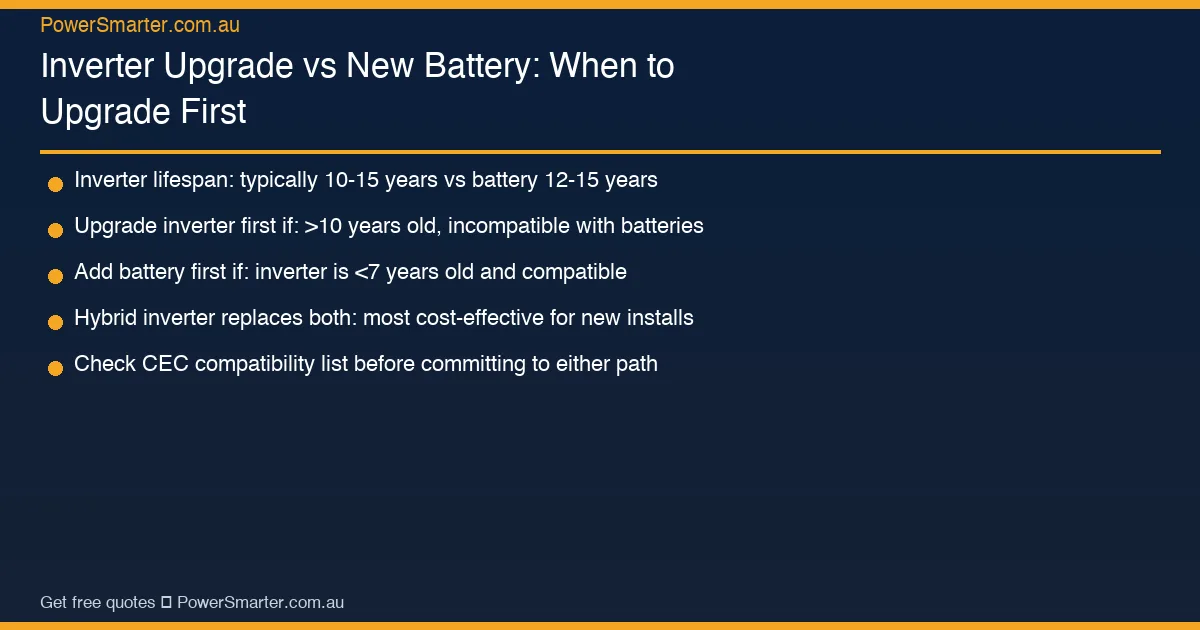
Your inverter is more than 10 years old. At this point, you're past the typical warranty period and failure becomes increasingly likely. Proactively upgrading to a hybrid inverter now lets you add a battery at any point in the future without further disruption.
Your inverter brand or model has limited battery compatibility. Some older Fronius, ABB, or generic inverters have no battery connection options and no upgrade path. If you want a DC-coupled battery, you'll need a new inverter regardless.
You're already seeing inverter faults or reduced performance. If the system is producing less than expected and your installer says the inverter is marginal, don't spend $10,000+ on a battery to pair with a failing inverter.
Your solar system is undersized relative to current energy use. If you've added an EV or a heat pump since installation and your existing array doesn't generate enough excess to meaningfully charge a battery, adding panels at the same time as an inverter upgrade makes the system design more coherent.
When to Add the Battery First
Add a battery before upgrading your inverter if:
Your inverter is under 7 years old and in good condition. Modern inverters from brands like Fronius, SolarEdge, and Sungrow often support AC-coupled battery connection without replacement. A properly designed AC-coupled system works well and avoids unnecessary expenditure.
Your budget is tight and you want to capture CHBP rebates before they potentially change. If the financial priority is accessing current incentives, an AC-coupled battery on a working inverter can be the right pragmatic choice.
Your existing inverter is specifically compatible with the battery you want. Some batteries are designed with AC coupling in mind. Check the manufacturer's compatibility documentation.
The All-in-One Option: Hybrid Inverter + Battery
If your inverter is approaching end of life, the cleanest solution is often replacing it with a hybrid inverter and adding a battery at the same time. You avoid the inverter upgrade cost in isolation, get a more efficient DC-coupled system, and have a cleaner installation with a single unified control system.
This is typically the most cost-effective path for anyone whose existing inverter is 8+ years old. The combined cost of a good hybrid inverter (say $2,000–$3,500 installed) and battery is usually less than the separate costs of an interim AC-coupled battery install followed by an inverter upgrade later.
Ask Your Installer These Specific Questions
Before accepting any quote, ask:
"What's the current condition and expected remaining life of my inverter?" A good installer will be honest about this. If they're recommending AC coupling and your inverter is already 9 years old, ask why they're not recommending a hybrid inverter replacement.
"If I add a battery now and need to replace my inverter in 3 years, what will that cost and will the battery still be compatible?" Get the answer in writing if possible.
"Is the battery you're recommending on the CEC approved product list and compatible with the CHBP rebate?" Essential for accessing any government incentives.
The right answer isn't the same for every household. But asking the right questions will help you make a decision that makes sense for your specific system, budget, and timeline.
Comments (0)
No comments yet. Be the first to share your thoughts!