
What Is a Hybrid Solar Inverter and Do You Need One?

The Inverter Question That Trips Everyone Up
When people start researching home batteries, they quickly encounter inverter types: solar inverters, battery inverters, hybrid inverters. The terminology gets confusing fast, and it matters because the wrong choice can cost you thousands in unnecessary components — or result in a less efficient system.
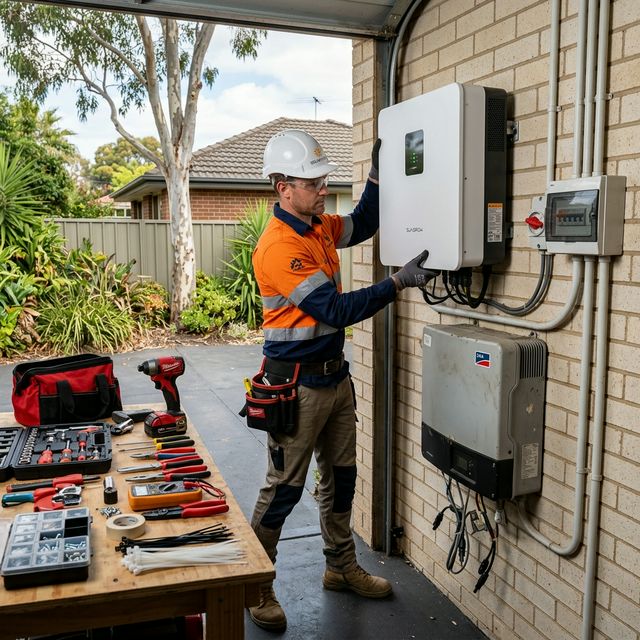
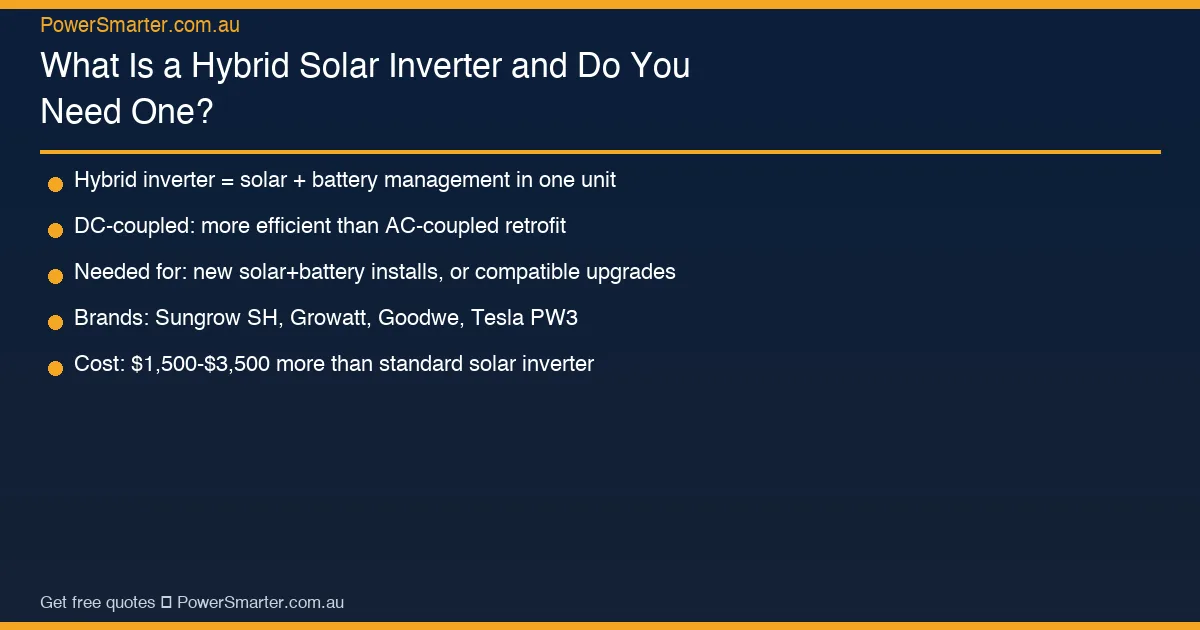
A hybrid solar inverter combines two functions that used to require separate devices: managing the DC power from your solar panels, and managing the charge and discharge of your battery storage. It's the central brain of a modern solar + battery system.
How It's Different from a Standard Solar Inverter
A standard string inverter (the type in most Australian homes installed before roughly 2020) takes DC power from solar panels and converts it to 240V AC for use in your home and export to the grid. That's it. It has no native ability to communicate with or charge a battery.
A hybrid inverter does all of that, plus it has a dedicated battery port. Your solar panels and your battery both connect to the hybrid inverter, which optimises the flow of energy between solar generation, battery storage, grid import/export, and home consumption. It does this continuously, in real time, adjusting as solar output changes throughout the day.
The result: a DC-coupled system, where solar energy flows directly into the battery without being converted to AC first (and then back to DC for the battery). This one conversion step makes a meaningful difference — DC-coupled systems are typically 3–5% more efficient than AC-coupled alternatives.
When Do You Actually Need One?
If you're installing solar and a battery together as a new system, a hybrid inverter is almost certainly the right choice. The efficiency benefit, cleaner system design, and simplified installation (one device instead of two) make it the obvious option for new installs.
If you already have solar and you're adding a battery as a retrofit, it depends on your existing inverter. If your inverter supports battery connection (some Fronius, SolarEdge, and SMA models do), you might be able to add certain compatible batteries without replacing the inverter. More commonly though, retrofitting to a DC-coupled battery will require replacing your existing inverter with a compatible hybrid model.
The retrofit question is where costs and complexity vary a lot. If your existing inverter is 5+ years old and approaching end-of-life, replacing it with a hybrid model now is a sensible move. If it's newer and still under warranty, it's worth exploring AC-coupled battery options that don't require an inverter swap.
The Main Hybrid Inverter Brands in Australia
Sungrow's SH series (SH5.0-10RT range) dominates the Australian market for hybrid inverters largely because of Sungrow's existing inverter market share and the SBR battery compatibility. Competitive pricing and a massive installer network make these the default recommendation for many installers.
Goodwe ES and EH series are strong value options, particularly for 5–10kW systems. Good compatibility with multiple battery brands. Less brand recognition than Sungrow among consumers, but well-regarded in the installer community.
Growatt MIN TL-X series offers competitive pricing and decent compatibility, but support and after-sales service have been variable — worth asking your installer specifically about their experience with Growatt in your area.
Fronius Gen24 Plus is the premium option for homeowners who want European engineering and excellent inverter performance. Higher upfront cost, but Fronius has a strong reputation for reliability and the Gen24 range supports multiple battery options including BYD.
Tesla Powerwall 3 is technically its own category — it has a fully integrated hybrid inverter built into the battery unit. You don't buy the inverter separately; it's included. This simplifies the system but also locks you into Tesla's ecosystem.
What It Actually Costs
A quality hybrid inverter (5–10kW) from Sungrow, Goodwe, or Growatt typically adds $1,500–$2,500 to a system cost compared to a standard solar inverter. Fronius Gen24 adds $3,000–$4,500 more than a standard inverter.
Against that, you're getting a more efficient system and avoiding the cost of a separate battery inverter later. For new installs, the economics are clear: go hybrid from the start if battery storage is part of your plan within the next few years.
The Bottom Line
If you're buying solar with the intent to add a battery either now or within 3–5 years, install a hybrid inverter from day one. The efficiency gains and avoided future costs justify the modest price premium.
If you have existing solar and you're adding a battery retrofit, get specific advice on compatibility before assuming you need a new inverter. A good installer will check your current inverter model and give you an honest assessment of the options.
And if you encounter someone trying to sell you both a new solar inverter AND a separate battery inverter for a new install, ask why they're not recommending a hybrid. That combination made sense before hybrid inverters became mainstream; today it's generally unnecessary complexity.
Comments (0)
No comments yet. Be the first to share your thoughts!