
How to Get the Most Out of Your Home Battery (Optimisation Guide)
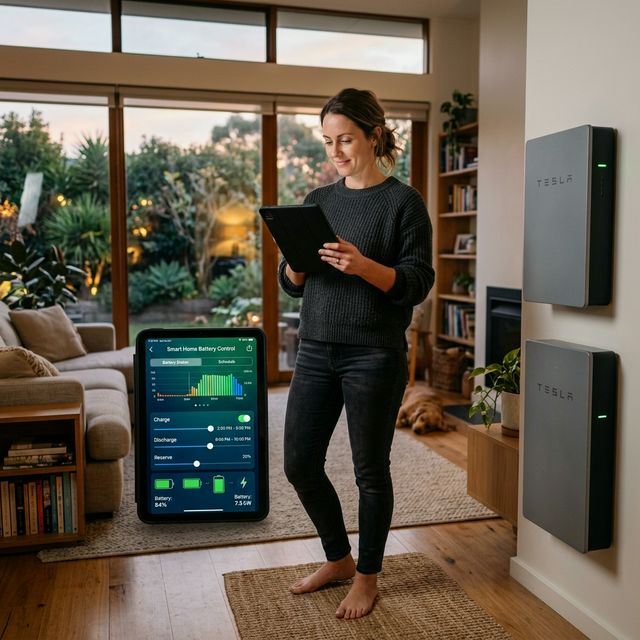
Once your battery is installed, the work isn't over. Most batteries deliver good performance out of the box, but with some targeted optimisation, you can meaningfully improve your savings. Here's the practical guide for Australian battery owners.
1. Get Your Electricity Plan Right First
The single biggest optimisation isn't in your battery settings — it's your electricity plan. If you're on a flat-rate tariff, switching to a time-of-use (TOU) plan can add hundreds of dollars annually to your battery's value.
What to look for in a TOU plan:
- Evening peak rate of 40+ cents/kWh (the higher, the more your battery saves you by covering this period)
- Off-peak rate under 20 cents/kWh (enables grid arbitrage when solar isn't available)
- Competitive solar feed-in tariff for your state
Changing your plan takes 20 minutes and can improve your battery's annual value by $300–$600. Do this first.
2. Configure Time-Based Scheduling
Most modern batteries support time-based scheduling — you can tell the battery exactly when to charge and when to discharge based on your tariff periods.
Typical optimal settings:
- Priority 1: Solar self-consumption (default for most batteries)
- Priority 2: Battery charges from solar when solar surplus > demand
- Peak period (3pm–9pm): Discharge battery, do NOT export to grid, do NOT charge from grid
- Off-peak period (11pm–7am): Allow grid charging if battery is below minimum threshold
Your installer should set this up at commissioning. If they didn't, find the scheduling section in your battery's app and configure it. If you're unsure, contact the manufacturer's support line.
3. Enable Storm Watch or Weather-Predictive Charging
Tesla's Powerwall includes Storm Watch, which automatically pre-charges the battery to 100% when severe weather is forecast via the Tesla/weather integration. Several other brands have similar predictive features.
Enable this if your system has it. In storm-prone areas, having a full battery before the grid goes down can mean 12+ hours of backup vs 4–5 hours with a partially depleted battery.
4. Enrol in a VPP Program
If your battery is VPP-compatible (Powerwall 3, sonnen, and many others), enrolling in a Virtual Power Plant program adds real income: typically $200–$800/year for participating in grid demand events.
Key considerations before enrolling:
- How many dispatch events per year does the program require?
- What's the minimum battery charge level they require you to maintain?
- Does VPP participation conflict with your backup power priorities?
- Are there exit clauses if you want to leave?
Most well-designed VPP programs respect your backup reserve requirements. But read the terms — some require you to maintain the battery at a lower minimum state of charge than you'd prefer for backup purposes.
5. Right-Size Your Backup Reserve
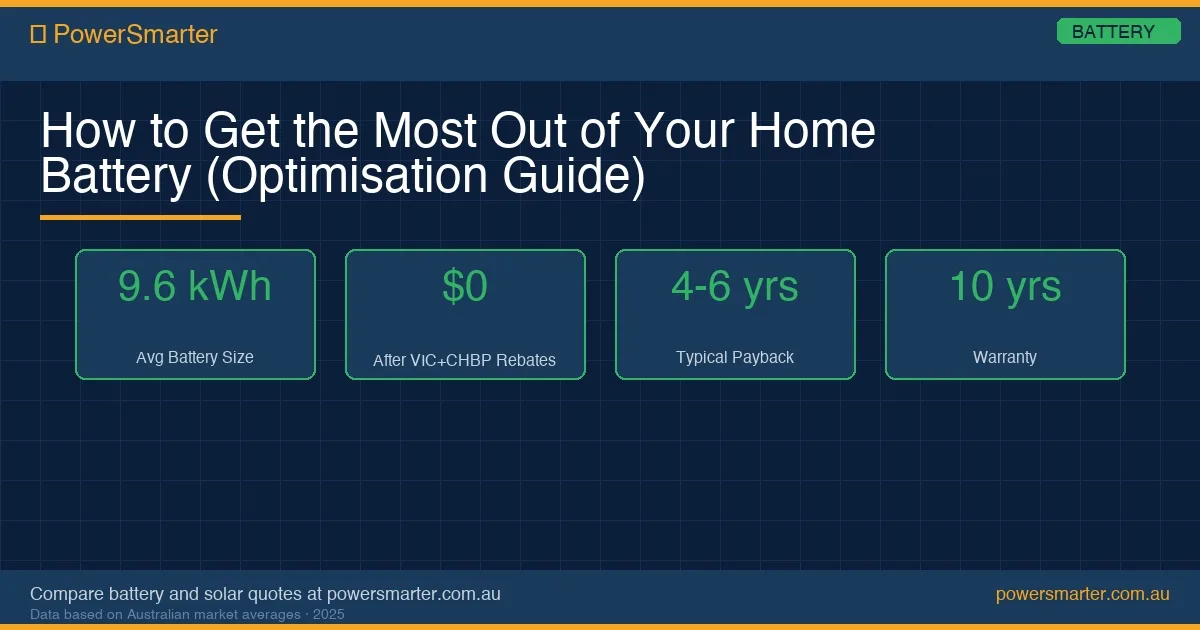
Your battery has a backup reserve setting — a minimum state of charge it won't discharge below during normal operations, held in reserve for grid outages. Most installers set this at 10–20%.
Consider your actual risk:
- In metro areas with infrequent outages: 10% reserve is reasonable (saves more for daily use)
- In storm-prone or regional areas: 20–30% reserve is prudent
- If you have medical equipment or work-from-home dependency: 30–40% reserve
Higher reserve = more backup security but slightly less daily self-consumption savings. Find the balance that matches your situation.
6. Monitor and Adjust Seasonally
Winter solar generation is significantly lower than summer. A battery scheduling configuration that works perfectly in December (plenty of surplus to fill the battery by noon) may leave the battery half-full by 5pm in June.
Check your battery app's data every 3 months. Look at:
- Average state of charge at sunset (if consistently low, consider adjusting morning scheduling)
- How often you're importing from the grid during peak hours (if frequently, investigate why)
- Whether the battery is consistently reaching 100% by midday (if so, your solar may be oversized relative to battery — adjust export settings)
7. Keep Firmware Updated
Battery manufacturers push firmware updates that often improve efficiency, scheduling logic, and grid safety functions. Most modern batteries update automatically when connected to Wi-Fi, but it's worth checking periodically that your battery is running current firmware. Your installer or the manufacturer's support line can confirm this.
8. Integrate High-Consumption Appliances Strategically
Shift major loads (dishwasher, washing machine, clothes dryer, pool pump) to daytime solar hours. This reduces what the battery needs to cover in the evening, extending how long your battery lasts through the night. Smart plugs with scheduling can automate this for older appliances.
The Bottom Line
A well-optimised battery system can deliver 20–40% more value than the same system on default settings with an unoptimised electricity plan. Most of the gains are from the electricity plan choice and scheduling configuration — not complex technical adjustments.
Comments (0)
No comments yet. Be the first to share your thoughts!