
Feed-In Tariff vs Battery Storage: Which Earns You More in 2025–26?
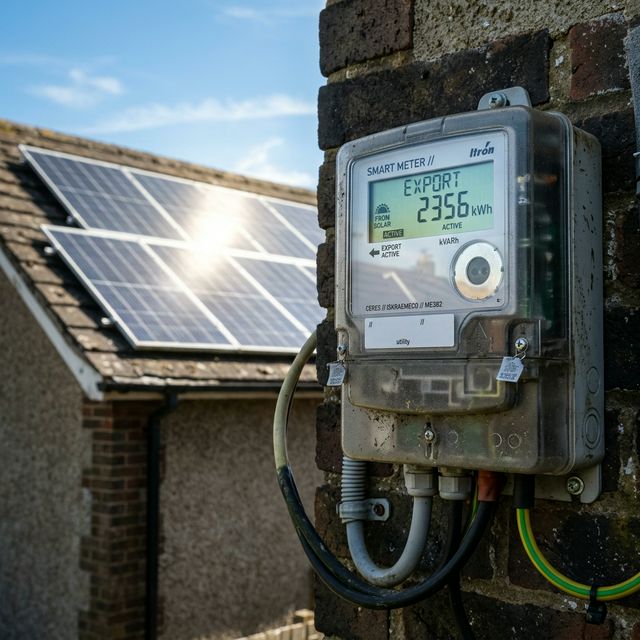
Every kilowatt-hour of surplus solar generation faces a choice: export it to the grid for a feed-in tariff, or store it in a battery for later use. For most Australian households in 2025–26, the battery wins — but let's run the actual numbers.
The Core Comparison
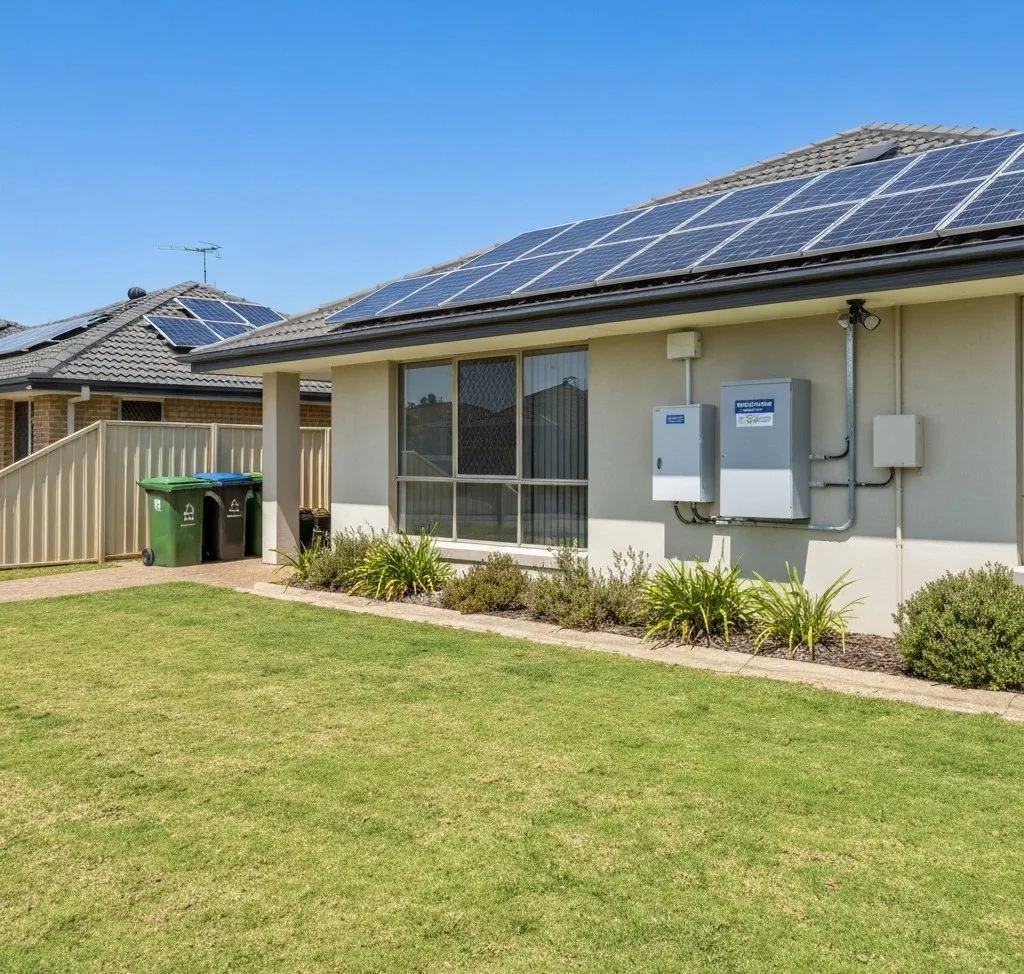
For each kWh of solar surplus, you either:
- Export: Receive your FiT rate (currently 2–10 cents/kWh in most states)
- Store: Save the grid electricity rate when you use the stored energy (currently 28–45 cents/kWh)
The financial advantage of storing vs exporting = grid rate − FiT rate (minus round-trip efficiency loss)
At 5c FiT and 32c grid rate, with 90% round-trip efficiency:
Store advantage = (32c × 0.9) − 5c = 28.8c − 5c = 23.8 cents per kWh
For every kWh you store and use instead of exporting: you earn 23.8 cents more than exporting.
State-by-State Comparison
South Australia
- FiT: 2–6 cents/kWh
- Grid rate: 38–46 cents/kWh
- Store advantage: approximately 28–39 cents/kWh
SA has the strongest battery case in Australia. FiTs are among the lowest nationally; grid rates are among the highest. The spread a battery captures is enormous.
NSW
- FiT: 2–10 cents/kWh
- Grid rate: 28–36 cents/kWh
- Store advantage: approximately 15–28 cents/kWh
Strong battery case, particularly on TOU plans where peak rates push grid savings higher.
Victoria
- FiT: 3–8 cents/kWh (flat) or time-varying
- Grid rate: 26–34 cents/kWh
- Store advantage: approximately 15–26 cents/kWh
Good case. VIC's time-varying FiT (higher in morning and evening, lower midday) can change the optimal export vs store decision by time of day.
Queensland
- FiT: 5–12 cents/kWh
- Grid rate: 28–33 cents/kWh
- Store advantage: approximately 13–23 cents/kWh
Moderate case. QLD has somewhat higher FiTs than other states, reducing the storage advantage slightly — but the CHBP rebate still makes the overall battery economics compelling.
When Exporting Still Makes Sense
Storing is almost always better than exporting — but there are situations where exporting some solar remains optimal:
Battery Is Full
When your battery is at 100% state of charge and household loads are met, surplus solar should export. There's nothing left to store. This is normal — a well-designed system will still export during peak solar hours on sunny days.
VIC Time-Varying FiT During High-Rate Export Windows
Victoria's time-varying feed-in tariff pays higher rates during morning and evening demand periods. If the FiT during these windows reaches 15–20 cents/kWh, the comparison with your grid rate becomes narrower. Some VIC households on time-varying FiTs find exporting in the morning (while battery charges later) and exporting in the evening (after battery depletes) is optimal.
Legacy High FiT Still Active
If you're still on a legacy FiT above 15 cents/kWh — grandfathered from earlier programs — the calculation changes. At 20 cents FiT vs 30 cents grid rate and 90% efficiency: store advantage = (30 × 0.9) − 20 = 27 − 20 = 7 cents/kWh. This is still positive for storing, but much less compelling than the modern FiT scenario.
If you're on a legacy FiT of 20+ cents, model carefully before installing a battery — the opportunity cost of changing your plan structure may offset some battery savings.
The Practical Answer
For the vast majority of Australian solar households in 2025–26, battery storage beats exporting by a margin of 15–40 cents per kWh. The CHBP further improves the economics by reducing upfront cost. The decision to store rather than export is clear in almost every scenario.
The only exceptions: battery at capacity (export naturally), and specific situations with unusually high legacy FiTs.
Comments (0)
No comments yet. Be the first to share your thoughts!