
Solar Export Limits: Why They're Happening (and How Batteries Help)
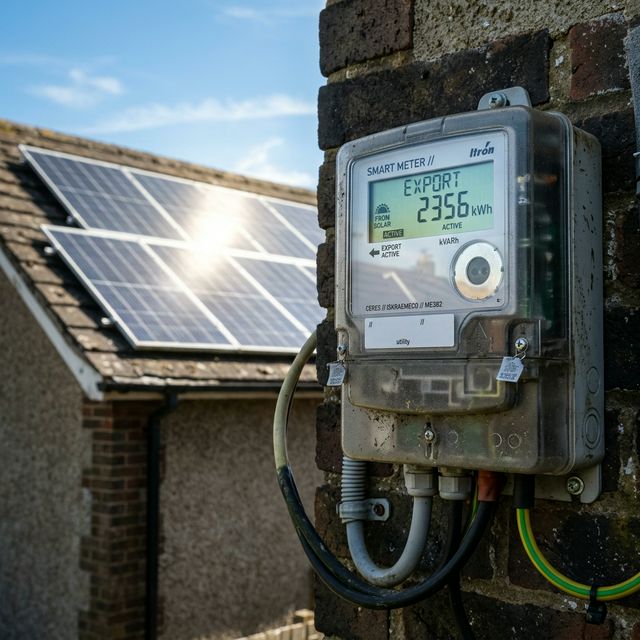
More and more Australian solar owners are receiving notices from their DNSP about export limits — restrictions on how much power you can send back to the grid. Some are being told they can export zero. If you have solar and you've been hit with an export limit, here's what's happening and what to do about it.
Why Export Limits Are Being Imposed

Australia's electricity distribution networks were built for one-way power flow: from large generators through the grid to homes. They weren't designed for millions of homes exporting power simultaneously at midday.
When many solar-equipped homes in the same area export at the same time, local feeder voltages rise above safe operating limits. If a distributor doesn't manage this, network stability is compromised. The response: export limiting, which caps how much any individual system can export at any given time.
Export limits are managed in several ways:
- Fixed export limits: A cap set at connection time — e.g., maximum 5kW export, regardless of your system size
- Dynamic export limits: A smarter approach where your system's inverter receives signals from the DNSP to adjust export in real time based on current network conditions
- Zero export: In some areas with severely constrained networks, no solar export is permitted at all for new connections
The Financial Impact
Export limits hurt financially in two ways:
- Clipped solar generation: If you have a 10 kW system and your DNSP caps export at 5kW, you may be generating power that can't go anywhere — wasted generation
- Reduced FiT income: If you can't export, you can't earn feed-in tariff for surplus generation
The scale of this problem is significant. For a 10 kW system with a 5 kW export cap on a sunny day, clipping can reduce effective generation by 30–40% during peak solar hours.
How Batteries Solve the Export Limit Problem
A battery provides the obvious solution: store the generation you can't export, then use it in the evening. Instead of clipping (wasting) the solar generation, it goes into the battery.
This is one of the most compelling financial cases for batteries in Australia right now — particularly in areas with low export limits. If you're generating 5kWh of solar that would otherwise be clipped, and storing it in a battery allows you to use it at 30–35 cents/kWh instead of losing it entirely, the savings are immediate and significant.
For households in zero-export areas: the battery becomes effectively mandatory for any financial benefit from solar generation. Without storage, all solar above your household's real-time consumption is wasted.
Dynamic Export Management and Batteries
Some modern hybrid inverter systems support dynamic export management — they communicate with the DNSP's voltage management signals and adjust both export and battery charging in real time. This is more sophisticated than a fixed cap and generally allows more solar to be used productively.
When getting quotes, ask whether the proposed inverter supports dynamic export limiting (sometimes called DEML or smart export management). In some states, this is increasingly required for new solar + battery connections.
Which States Are Most Affected?
- NSW: Ausgrid and Endeavour Energy have implemented dynamic export limiting across many areas. New solar connections in constrained areas often have 0–5 kW export limits.
- VIC: Significant export limiting in suburban Melbourne (Jemena, Citipower, United Energy territories). Dynamic export management increasingly standard.
- SA: SA Power Networks has implemented dynamic export management for many new connections.
- QLD: Energex areas (SEQ) have some of the most constrained networks for solar export.
What to Do If You Have an Export Limit
- Check your current inverter data to see how much generation is being clipped (many inverters show this)
- Get a battery quote — the financial case is especially strong if you have significant clipped generation
- Ask your installer about dynamic export management compatibility for your system
- If you're installing new solar, confirm the export limit your DNSP will allow before sizing the system
Export limits are a structural feature of Australia's rapidly evolving grid — not a temporary problem. Batteries are the most effective consumer response to this reality.
Comments (0)
No comments yet. Be the first to share your thoughts!