
Feed-In Tariff Changes in 2026: What It Means for Solar + Batteries
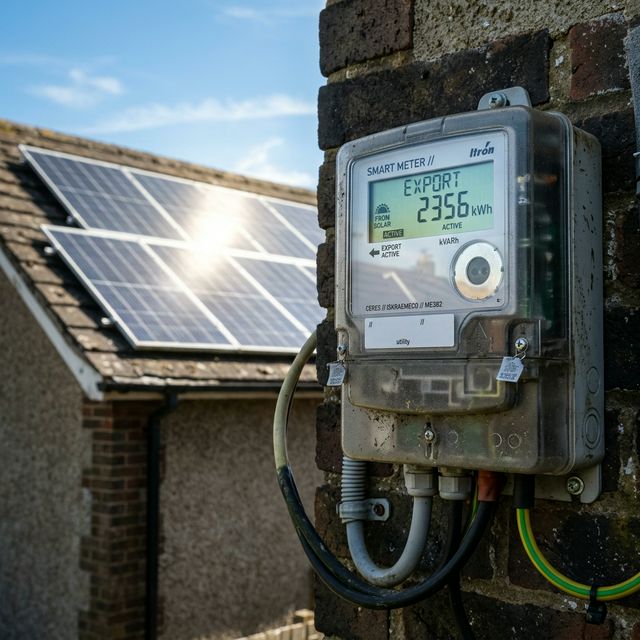
If you have solar panels, you've probably noticed your feed-in tariff (FiT) has been declining. This isn't an accident or a temporary blip — it's a structural market shift, and it has significant implications for whether you should be storing more of your solar generation rather than exporting it.
What's Happening to Feed-In Tariffs
Feed-in tariffs in Australia have been on a consistent downward trajectory since the generous early programs of 2009–2012 (some paid 44–66 cents/kWh). Here's where rates sit in early 2026 for most households:
- NSW: 2–10 cents/kWh (varies by retailer)
- VIC: 3–8 cents/kWh for flat FiT; some time-varying FiT up to 18 cents for off-peak export windows
- QLD: 5–12 cents/kWh
- SA: 2–6 cents/kWh (among the lowest in Australia)
- WA: 2.25–10 cents/kWh (Synergy Distributed Energy Buyback Scheme)
Compared to grid electricity rates of 28–45 cents/kWh, these are dismal returns. Every kWh you export at 5 cents that you could have stored and used at night instead of buying at 30 cents represents a 25-cent loss.
Why FiTs Are Declining
There are two main forces driving FiT reduction:
Wholesale Price Depression
So many Australian homes now have solar panels (over 3.6 million as of 2026) that midday solar exports have pushed wholesale electricity prices to near-zero or even negative during peak solar hours in many states. When wholesale prices are near zero, retailers have no economic basis for paying meaningful FiTs.
In fact, some states and some time periods see negative wholesale prices — meaning the grid is paying generators to take power off. This doesn't typically reach consumers as negative FiTs (yet), but it's the direction the economics are pointing.
Network Constraints
Distribution networks are struggling to accommodate two-way power flows from millions of solar installations. DNSPs in some areas are actively limiting export (zero or dynamic export caps), making the FiT a moot point for many households who can't fully export even when they want to.
What FiT Decline Means for Your Solar System
Self-Consumption Is Now Much More Valuable
When your FiT was 20 cents and your grid rate was 25 cents, the spread was just 5 cents/kWh — modest financial incentive to self-consume. In 2026, with a 5-cent FiT and 35-cent grid rate, the spread is 30 cents. That's a 6× larger incentive to use your own solar rather than export it.
This directly increases the financial case for home batteries. A battery that stores solar for your evening use instead of exporting it is now worth much more than it was five years ago.
Time-Varying Export Is Emerging
Some retailers and states are moving toward time-varying FiTs — paying more for export during periods of genuine grid need (typically morning and evening) and less (or nothing) for midday peak solar export. Victoria has been a leader in this approach. If your retailer offers a time-varying FiT, exporting in the morning (before battery is full) and evening (after battery is depleted) may be the optimal strategy.
Export Limiting Is Growing
More and more DNSPs are imposing zero or dynamic export limits on new solar connections. If you're getting new solar installed in 2026, you may not be allowed to export at all, or only up to a maximum rate (e.g., 5kW export cap regardless of your system size). In this scenario, a battery that stores what you can't export is not just financially smart — it's often the only way to use your full solar generation.
The Battery Case Has Strengthened Substantially
The calculation that determined whether a battery made sense five years ago was very different. Low FiTs, falling hardware prices, the CHBP rebate, and growing export limits have collectively shifted the economics. In 2026, the case for batteries — particularly in high-solar states — is materially stronger than it was even two years ago.
This trend is also directional: FiTs are unlikely to increase significantly in the future. The trajectory of declining export value and increasing self-consumption value is structural, not temporary.
What You Should Do Now
- Check your current FiT — if it's below 10 cents and your grid rate is above 28 cents, the battery maths is worth running
- Ask your retailer about time-varying FiT options
- If your DNSP has imposed export limits, get a battery quote immediately — you're almost certainly leaving generation potential unused
- If you're on an older legacy FiT still above 15 cents, model carefully before adding a battery — the battery may compete with that valuable export income
Comments (0)
No comments yet. Be the first to share your thoughts!