
Solar + Battery + Heat Pump: The "All-Electric" Bundle (Costs & Payback)
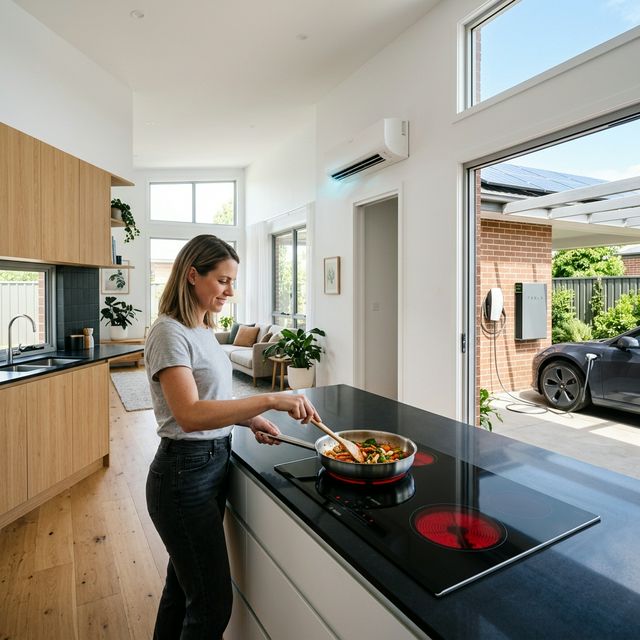
The all-electric home package — solar panels, a home battery, and a heat pump hot water system — is the combination that most dramatically transforms a household's energy economics. Here's what the bundle costs, what it saves, and how to sequence and finance it.
The Three Components
Solar Panels: The Energy Source
Solar is the foundation. Without solar generation, a battery is significantly less valuable and a heat pump's running cost is determined by grid electricity rates. With solar, both the battery and heat pump run primarily on free energy.
For an all-electric home, aim for:
- Minimum: 8 kW solar (to reliably generate surplus for battery + heat pump + home loads)
- Ideal: 10–13 kW solar if roof space allows (provides ample surplus, including for future EV charging)
Heat Pump Hot Water: The Biggest Energy Win
Hot water represents 20–25% of the typical Australian home's energy consumption. A heat pump hot water system uses approximately one-third the electricity of a conventional electric resistance heater for the same hot water output — and configured to operate during solar hours, it runs on your own solar generation at effectively zero cost.
Installed cost: $2,500–$5,000 depending on capacity and brand (Sanden, Reclaim, Rheem, Rinnai). Available state rebates in VIC, QLD, NSW, and SA can reduce this by $500–$1,500.
Home Battery: The Evening Buffer
The battery captures solar surplus from the middle of the day (after the heat pump has been running, after household loads are met) and stores it for evening and overnight use. In an all-electric home with a large solar system, the battery can cover most or all of your evening consumption.
Recommended size for an all-electric home: 10–13.5 kWh (13.5 kWh Powerwall 3 for families, 10 kWh for smaller households).
Bundle Pricing: What Australians Pay
Installed costs for the full all-electric bundle in March 2026:
| Component | Pre-Rebate Cost | Available Rebates | Net Cost |
|---|---|---|---|
| 10 kW solar system | $10,000–$13,000 | STCs (~$2,500) | $7,500–$10,500 |
| Powerwall 3 (13.5 kWh) | $14,000–$17,000 | CHBP ($5,022) | $8,978–$11,978 |
| Heat pump hot water | $3,000–$5,000 | State rebates ($500–$1,500) | $1,500–$4,500 |
| Total bundle | $27,000–$35,000 | $8,000–$9,000 | $18,000–$27,000 |
These are indicative ranges. Combining the bundle into a single project often saves $1,000–$3,000 in shared labour and single DNSP approval costs.
What the Bundle Saves
Annual savings for a typical 4-person household going from partial solar + gas hot water to the full all-electric bundle:
- Solar self-consumption savings: $1,200–$1,800/year
- Battery peak-hour savings: $600–$1,000/year
- Gas hot water to heat pump: $400–$700/year (gas energy + supply charge elimination)
- VPP income (optional): $200–$500/year
- Total annual savings: $2,400–$4,000/year
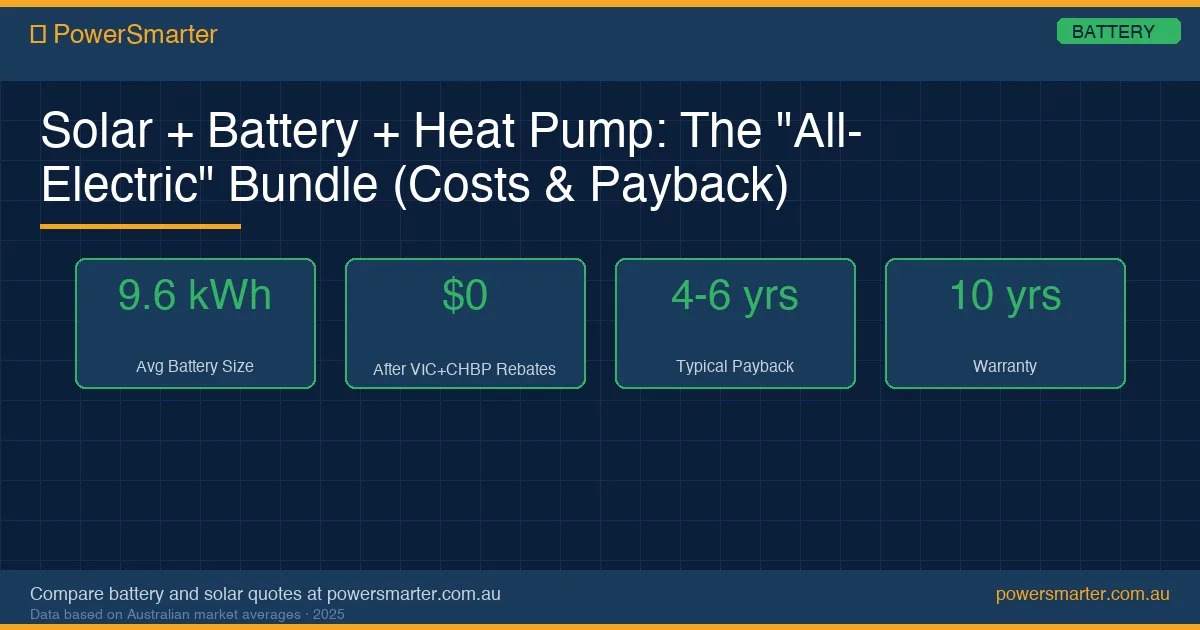
At a net bundle cost of $20,000–$24,000 and savings of $3,000/year: payback of 7–8 years. Within the 10-year warranty windows of all three components.
The Gas Exit Bonus
If you're eliminating gas hot water as part of the bundle, and you have no other gas appliances remaining, you can disconnect the gas meter entirely — eliminating the gas supply charge of $128–$219/year permanently. This additional saving improves payback further, and more importantly, ends your exposure to future gas price increases.
How to Finance the Bundle
At $18,000–$27,000 net cost, the bundle is a significant capital outlay. Financing options:
- Mortgage redraw at home loan rate (most cost-effective)
- CEFC-backed green loan (6–8%)
- Bundled installer finance — some providers offer all-in packages with financing
The savings from day one should comfortably exceed financing costs for a well-designed system at current interest rates.
Is the Bundle Right for You?
The all-electric bundle makes most sense for:
- Homeowners with gas hot water (heat pump delivers the biggest individual savings)
- Families with higher energy consumption (larger savings pool)
- Households in states with high electricity prices (SA, NSW, QLD)
- Long-term homeowners planning to stay 10+ years
Comments (0)
No comments yet. Be the first to share your thoughts!