
How the CHBP Changed the Australian Battery Market

Today — July 1, 2025 — the Commonwealth Home Battery Program officially takes effect. It's the first nationwide home battery rebate Australia has seen, and it lands in a market that was already growing strongly. Here's what it means for consumers, installers, and the industry.
The Context: Australian Battery Market Before CHBP
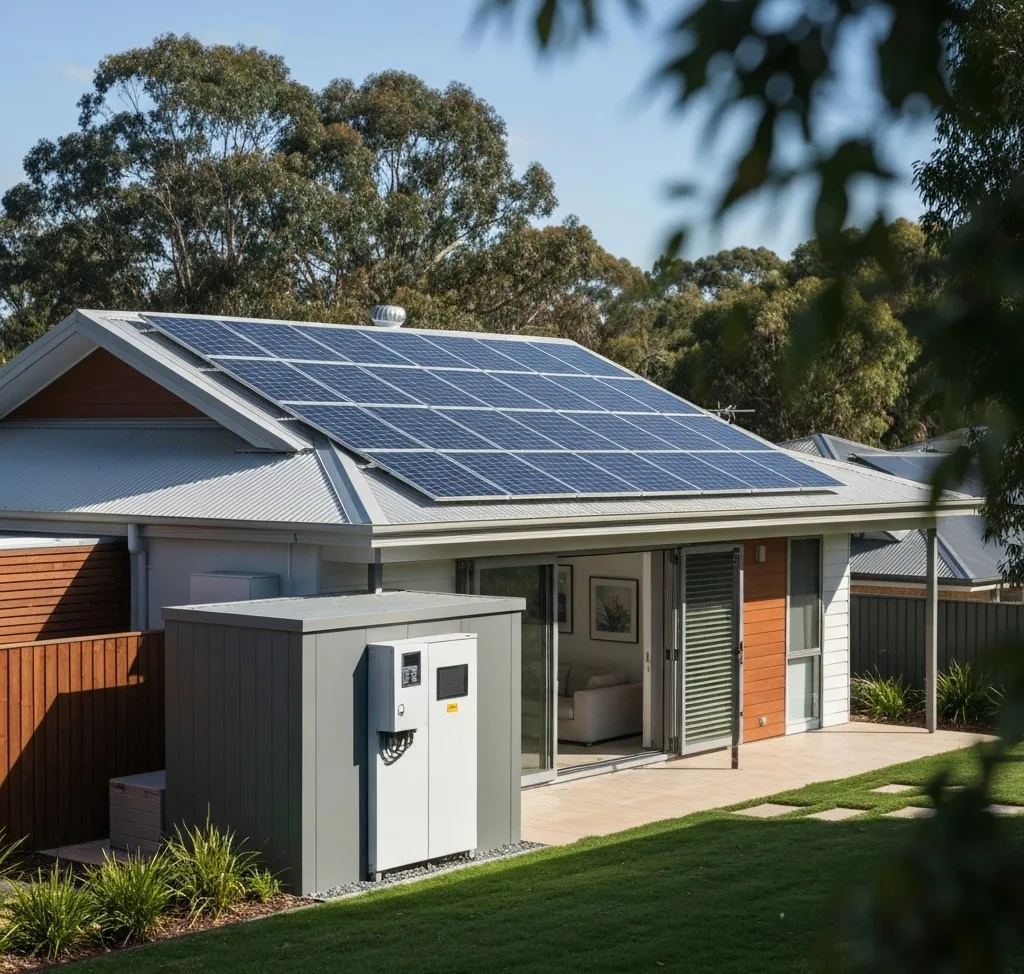
Home battery installation in Australia was already tracking strongly heading into 2025. The decline in battery hardware prices (down roughly 50% over the previous five years), the growing awareness of feed-in tariff reductions, and several state-based incentive programs had created meaningful market momentum.
But the economics were borderline for many households without state-level support. Without VIC Solar Homes or QLD Battery Booster programs, payback periods of 8–12 years were common — tight enough that many households held back from the investment.
CHBP changes that calculus nationally.
What CHBP Does to the Numbers
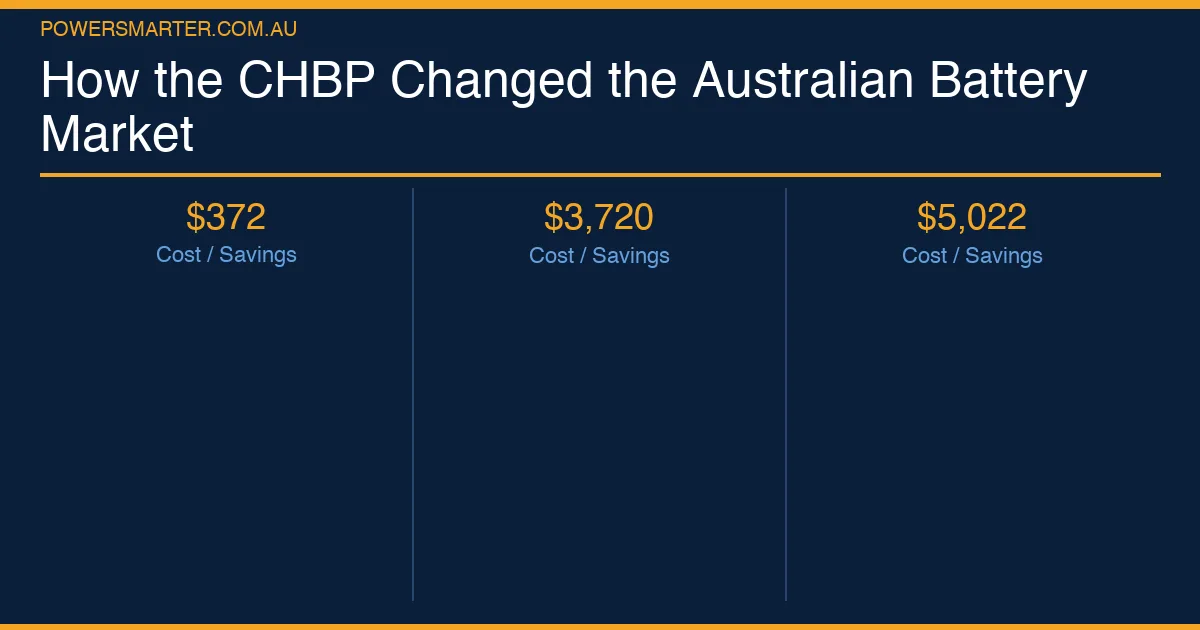
At $372 per kWh of usable capacity (capped at 50 kWh), the federal rebate delivers:
- $3,720 off a 10 kWh battery installation
- $5,022 off a 13.5 kWh Powerwall 3
- Up to $18,600 for a maximum 50 kWh installation
For the median household considering a 10 kWh battery at $12,000 installed, CHBP takes net cost to $8,280. At $1,200/year in savings, payback drops from 10 years to 6.9 years. For households stacking CHBP with a state rebate, payback can fall below 5 years.
That shift — from borderline to compelling — is what drives consumer action.
The Installer Market Response
Within the first weeks of CHBP going live, Australian battery installers report a significant jump in quote requests. This was anticipated — the federal government's pre-announcement media campaign successfully built awareness — but the volume has surprised even optimistic industry forecasters.
The consequence: installer queues are building rapidly in major cities. Melbourne, Sydney, and Brisbane installers are reporting lead times extending to 6–10 weeks within the first month. This is consistent with the experience when major state rebate programs launched (VIC Solar Homes battery rebate openings historically created multi-month waitlists).
The installer bottleneck is real: SAA accreditation has specific requirements that limit how quickly new battery installers can enter the market. Existing capacity can scale somewhat with additional staff, but the constraint takes time to loosen.
Hardware Impact: Which Brands Are Winning
CHBP is brand-agnostic — any CEC-approved battery qualifies. But the rebate environment disproportionately benefits batteries where the rebate makes a larger proportional impact on total cost:
- Mid-range batteries (Sungrow SBR, Alpha ESS, BYD HVM): CHBP covers 30–40% of installed cost, dramatically improving their value proposition
- Premium batteries (Powerwall 3, sonnen): CHBP covers a smaller proportion of total cost, but still delivers substantial absolute value
Sungrow and BYD are expected to see particularly strong volume gains — their competitive pricing combined with CHBP creates the most accessible entry point for cost-conscious buyers.
What the Consumer Decision Journey Looks Like
Pre-CHBP, a typical battery buyer journey: 6–12 months of research, starting from awareness through the solar industry media. Post-CHBP: the federal government's campaign has dramatically shortened this. Many households are going from awareness to quote request within weeks rather than months.
This compressed decision journey creates opportunities and risks. Opportunity: households that would have continued to procrastinate are now acting. Risk: some buyers are moving quickly without doing adequate homework, and the resulting demand pressure creates conditions where some less-scrupulous installers may cut corners.
The Long View
CHBP represents the most significant policy intervention in Australia's residential storage market since the Solar Credits scheme enabled mass solar adoption in the early 2010s. A well-funded, properly administered battery rebate has the potential to replicate that solar adoption curve — potentially adding several hundred thousand battery systems over the program's life.
The trajectory of this market from July 2025 onward will be shaped by the program's effective implementation, installer capacity scaling, and consumer awareness. The early signals are positive on all three fronts.
Comments (0)
No comments yet. Be the first to share your thoughts!