
Australian Electricity Prices: What's Changing (and Why Storage Helps)

Australian electricity bills have been climbing for years, and there's little in the policy or market environment to suggest a meaningful reversal. Understanding why prices are rising — and how storage creates a hedge against further increases — is essential context for any home battery decision.
Where Prices Stand in 2026
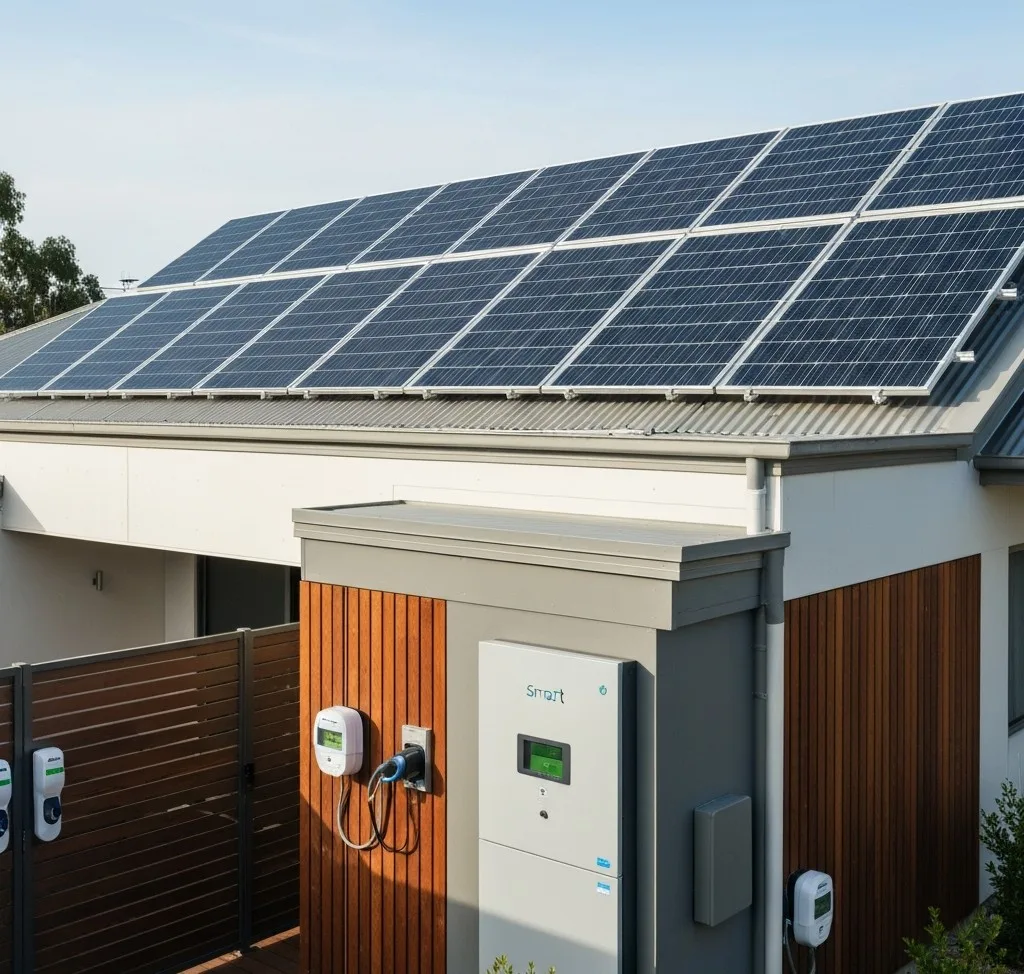
Average residential electricity rates by state in early 2026:
- South Australia: 38–46 cents/kWh — consistently the highest in Australia, sometimes the highest in the world for residential power
- NSW: 28–36 cents/kWh
- VIC: 26–34 cents/kWh
- QLD: 28–33 cents/kWh
- WA: 29–33 cents/kWh (Synergy regulated tariff)
- ACT: 24–30 cents/kWh (highest renewable penetration, among lower retail rates)
On TOU plans, peak period rates often exceed 40–55 cents/kWh. The effective rate for households using power during peak evening hours can be substantially higher than the flat rate average.
Why Prices Have Been Rising
Network Cost Increases
Network charges (the cost of maintaining poles, wires, transformers, and substations) typically represent 40–50% of your electricity bill. Network businesses have been investing heavily to upgrade ageing infrastructure and accommodate the transition to distributed solar generation — costs that are passed through to consumers via regulated distribution network service provider (DNSP) charges.
Renewable Energy Transition Costs
Building new renewable generation to replace retiring coal stations has upfront capital costs. While renewable generation is now cheaper than coal per kWh when built, the transition requires investment in transmission (new lines), firming (storage and gas backup), and grid services that have near-term cost impacts.
Wholesale Price Volatility
As coal generators retire and renewable generation is weather-dependent, the wholesale market has experienced more volatility — both very low midday prices (when solar floods the market) and higher evening prices (when solar drops and demand peaks). Retailers often price retail tariffs based on the peaks, not the average.
Gas Prices
Gas-fired generation is the marginal cost setter in the NEM for much of the day. Post-2022 global energy price shocks, Australian east coast gas prices remain elevated, keeping the marginal cost of evening power generation high.
The Outlook: Will Prices Come Down?
The honest medium-term view: network charges are unlikely to decrease significantly, as infrastructure investment continues. Generation costs may moderate over time as more renewable capacity comes online. But the structural factors driving high retail prices — network investment, firming costs, peak pricing — will persist through the decade.
The federal and state governments have provided some bill relief measures, but these are temporary and political, not structural. They address symptoms, not causes.
How a Battery Hedges Against Price Increases
A home battery's value increases as electricity prices rise. Here's why:
- Every kWh your battery dispatches instead of buying from the grid saves you the current retail rate. If that rate rises from 32 to 38 cents, your savings per kWh rise proportionally.
- Feed-in tariffs don't rise with retail rates — in fact, they tend to decline. The spread your battery captures (retail rate minus FiT) widens as retail rates increase.
- TOU peak rates tend to increase faster than off-peak rates. Battery owners on TOU plans benefit disproportionately from peak rate increases.
A conservative battery payback calculation uses today's electricity prices. The realistic outcome is better — because most households' batteries will be delivering more savings in year 5 than year 1, as electricity prices rise.
What SA Households Know That Others Are Learning
South Australia has had extreme electricity prices for years — and South Australia has had among the highest solar and battery adoption rates nationally. It's not a coincidence. When electricity prices are high enough, the financial case for self-generation and storage becomes overwhelming.
As retail electricity rates in NSW, VIC, and QLD continue their upward trajectory, the economics that have driven SA adoption are increasingly applying nationally. The CHBP rebate accelerates this further by reducing the upfront barrier.
Comments (0)
No comments yet. Be the first to share your thoughts!