
Off-Grid vs Grid-Connected Battery: Which System Is Right for You?
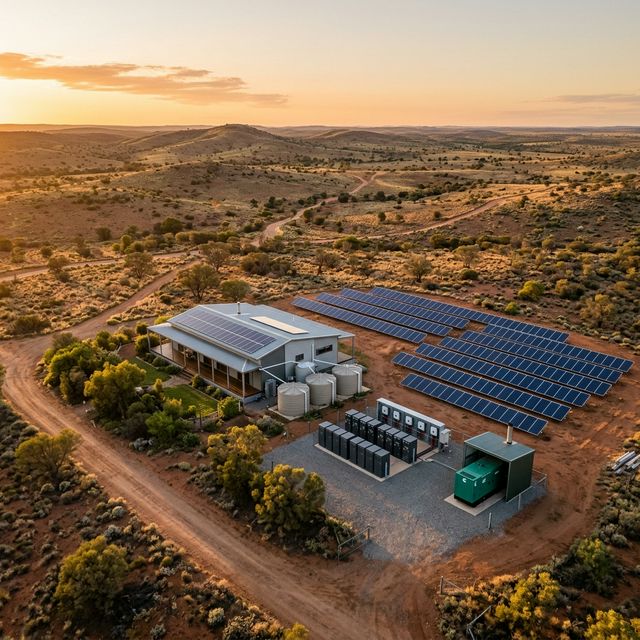
"Off-grid" sounds appealing in the abstract — energy independence, no electricity bills, no dependence on the network. But off-grid isn't a lifestyle upgrade for most suburban households; it's an engineering solution for specific situations where grid connection isn't practical or affordable.
Grid-connected batteries are a different product for a different problem. Understanding which category you're actually in will save you from a very expensive mistake in either direction.
The Core Difference
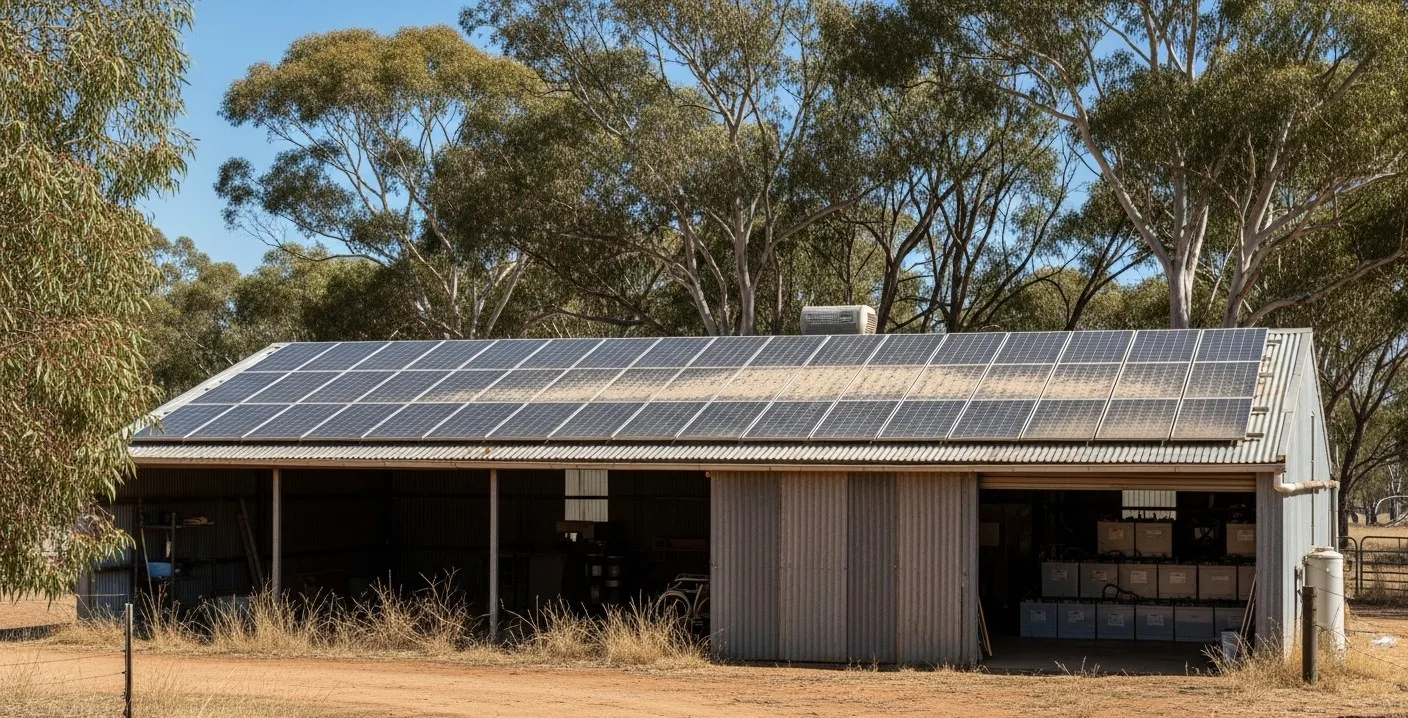
Grid-connected battery: Your home stays connected to the electricity network. The battery stores excess solar generation and dispatches it when needed. The grid is your backup — when the battery is empty, you buy from the grid; when it's full and solar is generating, you export to the grid. The system is relatively small (typically 5–20kWh) because it doesn't need to handle all your power needs independently.
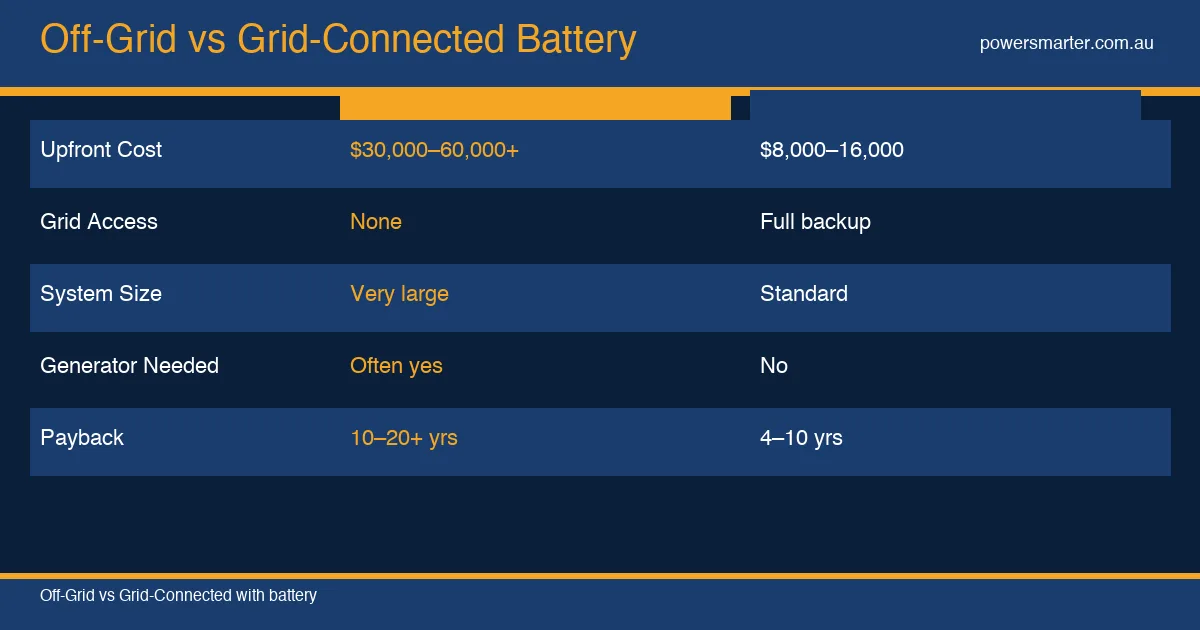
Off-grid system: Your home is completely disconnected from the electricity network. The solar panels and battery must meet 100% of your energy needs, including through cloudy stretches, seasonal low-sun periods, and high-demand peaks. This requires dramatically more solar capacity, much larger battery storage, and typically a backup generator for insurance. The system cost is significantly higher.
The Cost Difference Is Significant
Grid-Connected Battery (Typical Suburban Home)
- Solar: 6.6–13.3kW system — $5,000–$12,000 installed
- Battery: 10–20kWh — $8,000–$20,000 installed (before CHBP rebate)
- CHBP rebate: Up to $7,440 (20kWh × $372)
- Total net investment: $10,000–$25,000 depending on system size
- Electricity connection retained: Yes — you stay connected to the grid
Off-Grid System (Same Home)
- Solar: 15–30kW system required — $12,000–$30,000 installed
- Battery: 20–50kWh required — $15,000–$45,000 installed
- Backup generator: Essential — $3,000–$8,000
- Grid disconnection costs: Meter removal, distribution board modifications — $1,000–$5,000
- Total investment: $35,000–$90,000+ for a comparable home
The cost gap is enormous. A grid-connected system with battery might total $20,000–$30,000 for a well-set-up suburban home. An off-grid system for the same home could cost $50,000–$90,000+.
CHBP and Off-Grid Systems
One important note: the CHBP does cover off-grid systems in specific cases. Off-grid systems are eligible for the rebate if:
- The property is more than 1km from the electricity grid, OR
- The cost of connecting to the grid exceeds $30,000
If you're in regional or rural Australia and meet these criteria, the CHBP applies. The rebate can significantly offset the higher cost of an off-grid battery bank.
Who Should Actually Go Off-Grid?
Off-grid is the right choice when:
Grid Connection Is Too Expensive or Unavailable
For rural or remote properties where connecting to the grid would cost $30,000–$100,000+ (running power lines across paddocks, crossing highways, etc.), off-grid becomes cost-competitive. If the alternative is a $60,000 grid connection fee, a $50,000 off-grid system is financially rational.
Grid Reliability Is Extremely Poor
Some remote areas experience outages measured in days or weeks, not hours. For these properties, a grid connection offers little practical value — off-grid with a battery bank and generator provides more reliable power than the grid delivers.
True Energy Independence is the Goal (With Realistic Expectations)
Some buyers are philosophically committed to energy independence regardless of cost. That's a valid values-based decision. But be honest with yourself: in a suburban context, the grid is your cheapest and most reliable backup. Going off-grid for ideological reasons in a suburb costs $30,000–$60,000 more than staying grid-connected with a battery.
What Grid-Connected Batteries Achieve
For most Australian homeowners — suburban, metro, or regional within grid reach — a grid-connected battery system with good solar delivers:
- 70–95% self-sufficiency (depending on system size and household usage)
- Backup power during blackouts (if your battery has a backup mode — not all do; confirm before purchasing)
- Significant bill reduction — often 80–95% reduction in grid imports
- VPP participation options — additional income
- Grid as safety net — on long cloudy stretches or unusually high-demand periods, the grid provides what your battery can't
For most suburban households, 85–95% self-sufficiency at a cost of $15,000–$25,000 is dramatically better value than 100% self-sufficiency at $50,000–$90,000.
Partial Off-Grid: A Middle Path
Some rural/semi-rural properties take a "partial off-grid" approach: maintain a grid connection (at higher standby cost) but install enough solar + storage to be effectively grid-independent for most of the year, with the grid as a rare backup during prolonged low-generation periods.
This preserves the safety net at lower cost than full off-grid — a pragmatic middle ground for households that want near-independence without the full off-grid investment.
Key Questions to Determine Your Category
- What's the cost of your grid connection? If it's a standard residential connection (meter already there), grid-connected is almost certainly right for you.
- How far are you from the grid? If you're more than 1km from the nearest connection point, off-grid economics start to make sense.
- What are your grid reliability expectations? If you experience multi-day outages regularly, off-grid might be worth the cost — or a grid-connected system with substantial battery backup may address most of your concerns at lower cost.
- What's your budget? Off-grid requires $35,000–$90,000+. Grid-connected with CHBP: $10,000–$25,000. The budget question often decides this quickly.
Comments (0)
No comments yet. Be the first to share your thoughts!