
Home Energy Independence: A Practical Plan (Not Hype)
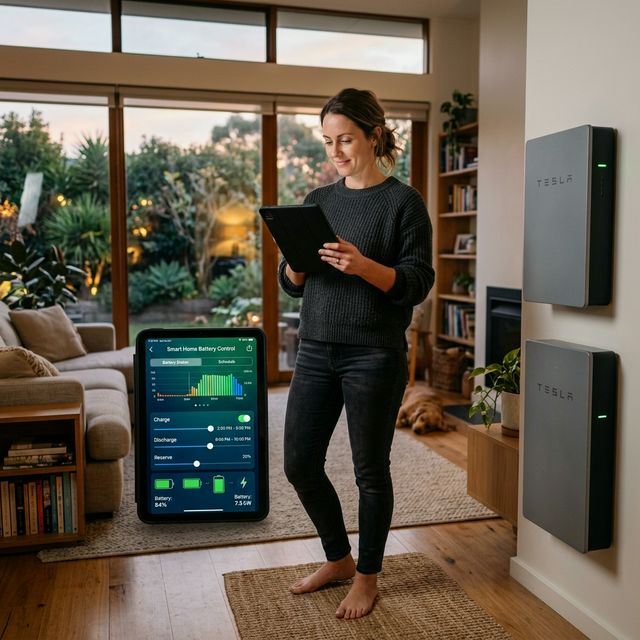
"Energy independence" is a phrase that gets used a lot in solar and battery marketing. It usually means something vague — a sense of freedom from the grid, reduced dependence on electricity retailers. That's a fair goal. But achieving it meaningfully requires a more systematic approach than simply buying a battery.
Here's a practical framework — one that actually delivers, not just in the brochure.
What Does Energy Independence Actually Mean?
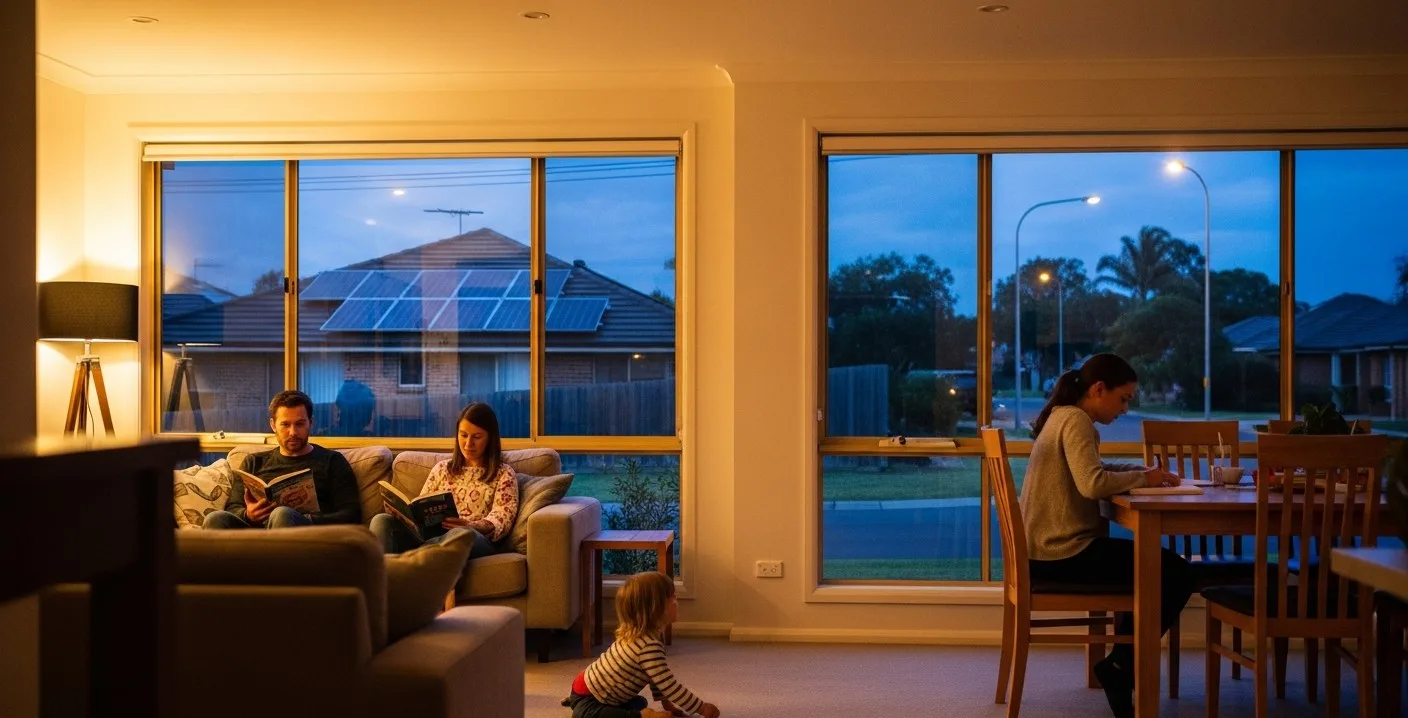
For most Australian households, complete energy independence (100% off-grid) isn't the goal — it's enormously expensive and rarely the most rational choice. What most people mean, and what's actually achievable, is:
- High self-sufficiency: 70–95% of your energy needs met by your own generation and storage
- Low grid exposure: Most grid imports happen in off-peak periods at low rates
- Minimal electricity bills: Near-zero or very low monthly costs
- Blackout resilience: Ability to maintain critical loads during grid outages
- Gas-free (or minimal gas): For households wanting full electrification
Achieving 80–95% self-sufficiency with a well-designed system is realistic and financially sensible. Chasing the final 5–15% to reach 100% typically costs as much as the first 90% — and isn't worth it for grid-connected properties.
The Five-Step Framework
Step 1: Reduce Your Load First
Before spending a dollar on generation or storage, understand and reduce your energy consumption. This is the step most people skip — and it's the one that makes everything else cheaper.
Actions with strong ROI:
- LED lighting: If you haven't done this, it's $200–$400 and reduces lighting load by 80%
- Standby elimination: Smart power boards that cut standby waste — $50–$150 each
- Appliance upgrading: Old fridges and washing machines are energy hogs. An energy-rated new appliance can save $100–$200/year in electricity
- Hot water timing: If you have electric hot water, scheduling it to off-peak hours costs nothing
Every kWh you don't use is a kWh you don't need to generate or store. Reducing consumption by 20% means you can size your solar system 20% smaller — saving real money.
Step 2: Electrify Your Biggest Gas Loads
If you have gas in your home, the path to energy independence runs through electrification. Gas can't be replaced by solar — you can't put gas from your roof. Electricity from solar can replace it.
Priority order for gas replacement:
- Hot water: Switch to heat pump hot water. As covered above, fastest payback in electrification.
- Space heating: If you have ducted gas heating, high-efficiency reverse-cycle heat pump (air conditioner) as replacement or supplement.
- Cooking: Induction cooktop replaces gas stove — faster cooking, same or lower running cost.
Electrifying these loads also makes your solar and battery more valuable — the electricity those appliances consume can then be served by your solar generation.
Step 3: Install Solar (Right-Sized)
Solar is the engine of energy independence. Size it correctly:
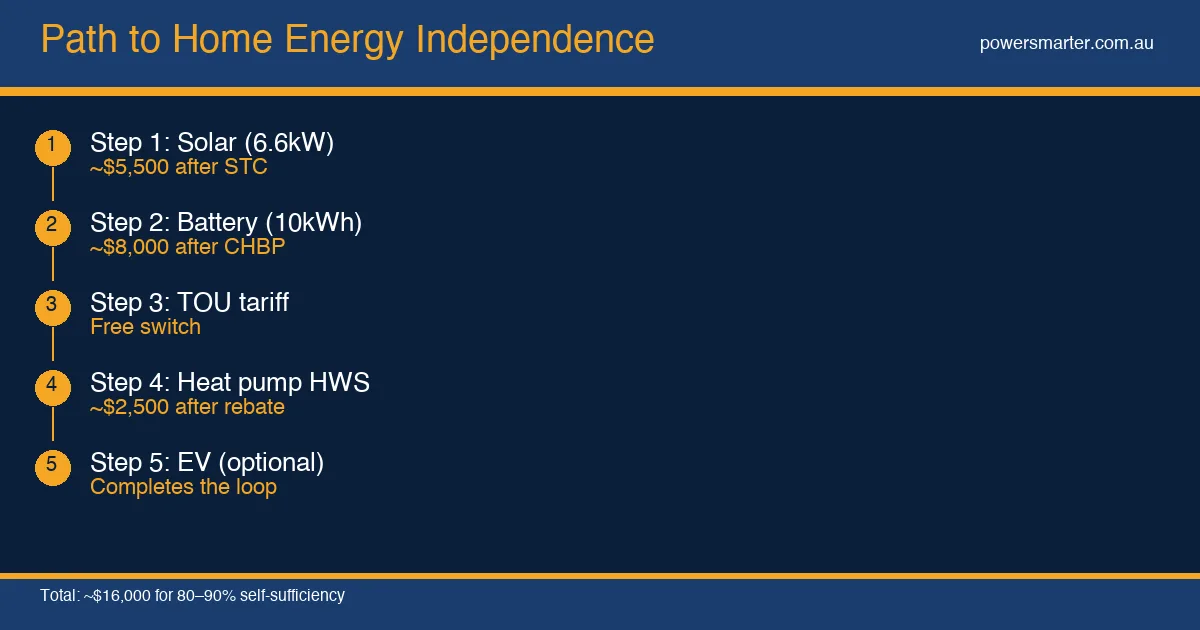
- Minimum effective size: 6.6kW for a typical 3–4 person household
- With heat pump hot water: add 1.5kW extra
- With EV: add 2–3kW per vehicle
- With large battery (15kWh+): ensure solar can consistently fill the battery and cover daytime loads simultaneously — 10kW+ recommended
Don't undersize solar to save upfront cost — you'll be undersizing your battery utilisation and capping your self-sufficiency. The marginal cost of an extra 1.65kW of panels (one panel) is typically $300–$500, while the energy value over 10 years is much more.
Step 4: Add Battery Storage
With solar now providing daytime power, a battery bridges the gap to energy independence by covering your overnight loads with stored solar rather than grid electricity.
Sizing the battery for your independence goals:
- 70–80% self-sufficiency target: 10kWh battery for a 20–25 kWh/day household
- 85–90% self-sufficiency: 15kWh+ — covers all but cloudy winter nights
- Approaching 95%: 20kWh+ with large solar — the battery rarely runs out except in extended low-sun periods
Use the CHBP rebate — it makes this step significantly cheaper. $372/kWh on up to 50kWh of storage means $3,720–$7,440 off your installed battery cost.
Step 5: Optimise with Smart Controls
Hardware alone doesn't maximise independence. Smart controls close the gap:
- Battery scheduling in TOU mode: Aligned with your tariff structure
- Solar diversion for hot water and EV: Directing surplus solar to heat pumps and car chargers before exporting
- VPP participation: Converting spare battery capacity to income
- Demand response awareness: Shifting discretionary loads (washing, dishwasher) to solar-generation hours
Realistic Outcomes at Each Stage
| Stage | Self-Sufficiency | Annual Bill Reduction |
|---|---|---|
| LED + efficiency baseline | N/A | $150–$300 |
| + Heat pump hot water | N/A | +$400–$700 |
| + 6.6kW solar (no battery) | 35–50% | +$800–$1,200 |
| + 10kWh battery | 70–85% | +$1,000–$1,400 |
| + 20kWh battery + larger solar | 88–95% | +$300–$600 additional |
| + Smart scheduling + VPP | 88–95%+ | +$150–$600 additional |
The Honest Sequencing Advice
Don't try to do everything at once. The sequencing matters:
- Efficiency and load reduction first — cheapest improvements
- Heat pump hot water — fast payback, enables solar integration
- Solar — generates the energy that powers everything
- Battery — bridges day to night, completes the self-sufficiency loop
- Smart controls — optimises what you have
Each step pays for itself. Each step makes the next step more valuable. The households that have done all five are paying electricity bills of $200–$600/year in situations where they used to pay $3,000+.
That's energy independence — not the off-grid fantasy, but the very real outcome of a systematic, well-sequenced approach.
Comments (0)
No comments yet. Be the first to share your thoughts!