
Home Battery Safety: What You Need to Know Before Installing
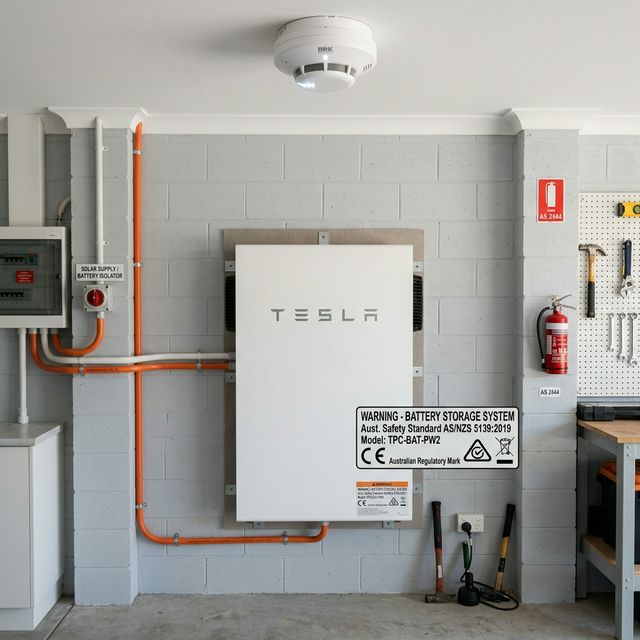
Home batteries are, in the vast majority of cases, safe and reliable over their lifetime. But they're significant pieces of electrical equipment containing substantial energy — and there are real standards, installation requirements, and risks worth understanding before you sign an installation contract.
The Australian Standard: AS/NZS 5139
The primary safety standard governing home battery installations in Australia is AS/NZS 5139:2019 — "Electrical installations — Safety of battery systems for use with power conversion equipment." This standard covers:
- Approved battery installation locations
- Separation distances from ignition sources and habitable areas
- Ventilation requirements
- Signage requirements
- Electrical protection requirements
- Emergency access requirements
Your installer is legally required to comply with AS/NZS 5139. If they don't mention it or seem unfamiliar with it, that's a problem.
Where Can a Battery Be Installed?
AS/NZS 5139 restricts battery placement. Generally permitted locations:
- Garage: Yes, with appropriate clearances from ignition sources (gas appliances, hot water systems)
- Outside wall: Yes, provided the battery is rated for outdoor installation and protected from direct weathering
- Dedicated external enclosure: Yes
- Under stairs or in a cupboard (enclosed habitable space): Usually no, or restricted
- Inside a bedroom or living area: No
The specific requirements depend on the battery's energy capacity and classification. Ask your installer to walk you through where and why they're proposing to mount the battery.
Fire Risk: The Honest Assessment
Lithium battery fires do happen — but context matters enormously:
- The vast majority of lithium battery fires involving consumer products are from poorly made or damaged batteries — often in small devices, not purpose-built home storage systems
- Quality home batteries from major brands (Tesla, BYD, Sungrow, Enphase, sonnen) use LFP chemistry, which has substantially lower thermal runaway risk than older NMC chemistry
- Properly installed, compliant home batteries in Australia have an excellent safety record
The main fire risk factors in residential battery installations:
- Non-compliant installation (improper location, inadequate clearances)
- Physical damage to the battery (poor installation, impact)
- Off-brand or non-CEC-listed batteries with inadequate quality control
- DIY installation (illegal for a reason)
Questions to Ask Your Installer
Before signing, ask:
- "Is the installation location compliant with AS/NZS 5139?"
- "What clearances are required from our hot water system / gas appliances?"
- "Does this battery require outdoor enclosure or weatherproofing at this location?"
- "Is this battery on the CEC approved battery storage list?"
- "What signage is required on or near the battery?"
A qualified, experienced battery installer will answer all of these without hesitation.
Insurance: What to Declare
A home battery is a significant electrical installation that should be declared to your home and contents insurer. Failure to declare a battery installation that subsequently contributes to a claim could give your insurer grounds to dispute or reduce the payout.
The good news: most insurers are familiar with solar and battery installations and have standard processes for noting them on your policy. Call your insurer after installation and update your policy. The impact on premiums varies — for properly installed, compliant systems, many insurers don't charge additional premium.
CEC Approved Battery List
The Clean Energy Council maintains an approved battery storage products list. Batteries on this list have met CEC's product standards requirements and are eligible for CEC-related programs and installer accreditation requirements. Always confirm the battery model you're being quoted is on the current CEC list.
The Bottom Line
Home battery safety is well-governed by Australian standards and CEC requirements. The risk with a quality battery, properly installed by an SAA-accredited installer, is very low. The risk with an off-brand battery, improperly installed or located, is substantially higher. The regulations exist precisely to enforce the former and prevent the latter.
Comments (0)
No comments yet. Be the first to share your thoughts!